Category: Blog

  • Recipe for Banana Nut Bread

    Banana Nut Bread Recipe: My Tried and True Version (And Full Starbucks Nutrition Breakdown)

    Updated: Sep 2026
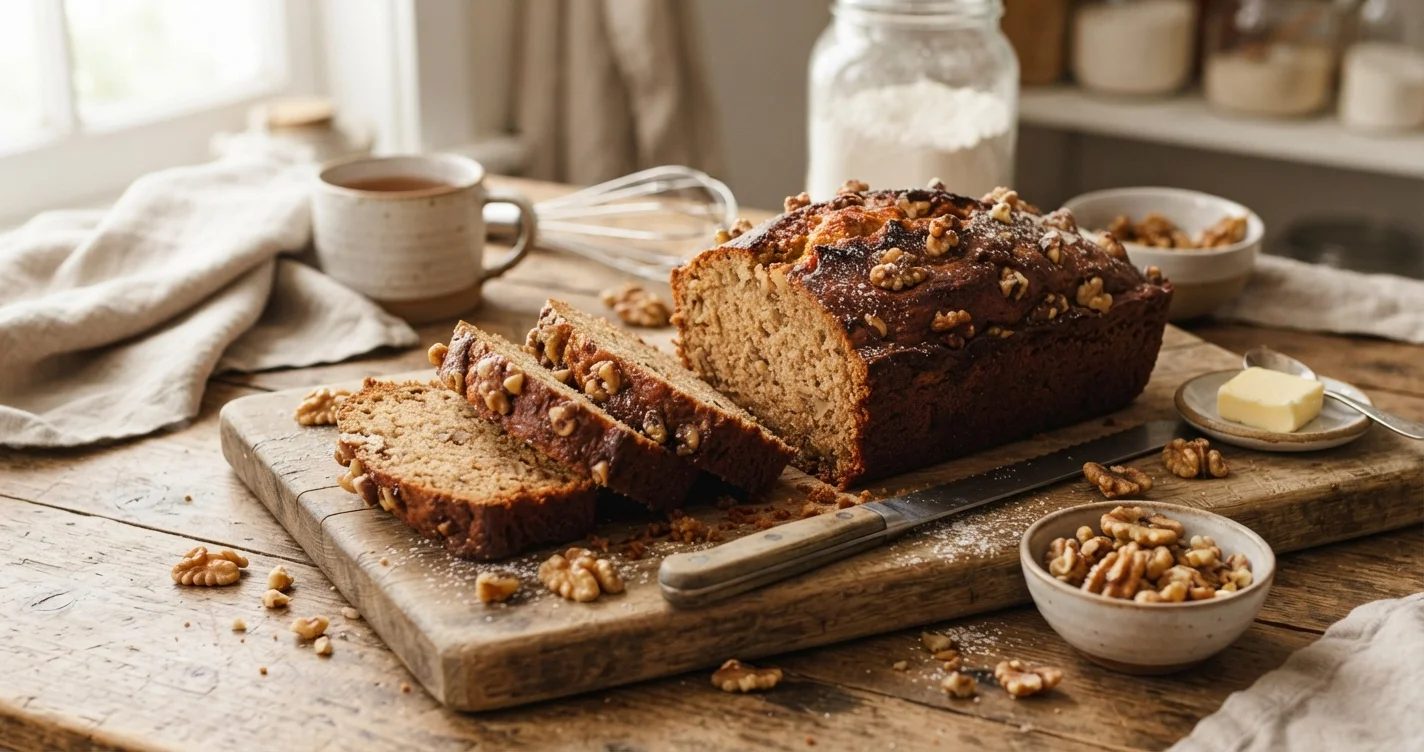
    Banana Nut Bread Recipe starbucks

    My first try at baking banana nut bread at home started with a problem. I was spending six dollars a day on Starbucks banana loaf. It was eating up nearly a quarter of my daily calories. So I decided to make it myself.

    I run the numbers on Starbucks food and drinks every week for this site, so one afternoon I pulled the nutrition label, wrote down every gram of fat and sugar, and thought — I bet I can build a version of this at home that tastes just as good, for less than half the calories and a fraction of the price.

    That afternoon turned into probably forty test loaves over the following months. I burned two batches, underbaked three, and finally landed on a recipe for banana nut bread that’s moist in the middle, has a slightly crackly, sugared top, and doesn’t taste healthy even when it’s a lighter version.

    Below is that recipe, plus every calorie, gram, and swap I tested along the way — so you can decide for yourself whether the coffee-shop Slice is worth it, or whether five minutes of mixing at home gets you there for less.

    Why This Recipe Works?

    Why This Banana Nut Bread Recipe Works?

    Most banana bread recipes online fall into two camps: the overly cakey, sugar-bomb version, or the healthy version that turns out dense and gummy. This one sits in the middle on purpose.

    A few things I learned through trial and error:

    • Use almost black bananas. Yellow bananas with brown spots are underripe for this purpose — the natural sugars haven’t fully converted yet, and your loaf will taste flat.
    • Melted butter, not softened. It coats the flour faster and gives a denser, more bakery-style crumb, closer to what you’d get from a Starbucks-style loaf.
    • Don’t overmix once the flour goes in. This is the single biggest reason home versions turn out tough. Twelve to fifteen strokes is enough.
    • Toast the walnuts first. Raw walnuts baked into batter taste bitter and soft. Five minutes in a dry pan changes the loaf’s entire flavor.

    Recipe for Banana Nut Bread (Classic Version)

    Recipe for Banana Nut Bread (Classic Version)

    Prep time: 15 minutes | Bake time: 55–60 minutes | Yields: 1 loaf (10 slices)

    Ingredients

    IngredientAmountNotes
    Ripe bananas, mashed3 large (about 1½ cups)The blacker, the better
    Unsalted butter, melted½ cup (1 stick)Cooled slightly
    Brown sugar¾ cupPacked
    Granulated sugar¼ cupOptional, for a crisper crust
    Eggs2 largeRoom temperature
    Vanilla extract1 tsp
    All-purpose flour2 cupsSpooned and leveled, not scooped
    Baking soda1 tsp
    Salt½ tsp
    Ground cinnamon½ tspOptional but recommended
    Walnuts, chopped and toasted¾ cupReserve 2 tbsp for topping

    Step-by-Step Instructions

    1. Warm the oven to 350°F (175°C). Smear a 9×5-inch loaf pan or line it with parchment paper.
    2. Roast the walnuts in a dry frying pan over medium heat for 4–5 minutes, stirring often, until fragrant. Set aside to cool.
    3. Mash the bananas in a large bowl until mostly smooth, leaving a few small lumps.
    4. Whip in the melted butter, both sugars, eggs, and vanilla until combined.
    5. Sieve together the flour, baking soda, salt, and cinnamon in a separate container.
    6. Turn the dry ingredients into the wet mixture in two additions, stirring only until no dry flour streaks remain.
    7. Fold in the walnuts, saving a small handful for the top.
    8. Pour the batter into the prepared pan, smooth the top, and scatter the reserved walnuts over it.
    9. Bake for 55–60 minutes, tenting loosely with foil after 35 minutes if the top is browning too fast. It’s done when a toothpick inserted in the center comes out with a few moist crumbs (not wet batter).
    10. Cool in the pan for 15 minutes, then transfer to a mesh rack to cool completely before slicing — cutting it warm makes it gummy.

    Quick tip: If you want a bakery-style, slightly domed top like the Starbucks loaf, don’t open the oven door for the first 35 minutes. The temperature drop is what causes flat or sunken loaves.

    Starbucks Banana Nut Bread: Full Nutrition Facts

    Starbucks Banana Nut Bread: Full Nutrition Facts Starbucks

    Here’s where it gets interesting for anyone tracking calories. Starbucks’ bakery case item has actually changed names and recipe over the years — it used to be sold simply as Banana Nut Bread, and today the same style of loaf is listed as the Banana Walnut & Pecan Loaf.

    Depending on the market and the exact database you check, you’ll see numbers ranging from about 360 to 420 calories per Slice, because portion size and the oil/nut ratio shift slightly by region.

    The most commonly reported figures for the current U.S. version are below.

    NutrientPer Slice (approx. 115–125g)% Daily Value
    Calories410–420 kcal21%
    Total Fat20–22g27%
    Saturated Fat3g15%
    Trans Fat0g0%
    Cholesterol25–55mg8–18%
    Sodium210–350mg9–15%
    Total Carbohydrates50–52g18–19%
    Dietary Fiber2–4g7–14%
    Sugars28–46g—
    Protein6g12%

    Based on a 2,000-calorie daily diet. Figures vary by source and region — always check the current listing in the Starbucks app or on starbucks.com before relying on an exact number, since bakery recipes are reformulated periodically.

    Main ingredients in the Starbucks version: bananas, enriched wheat flour, sugar, soybean and/or canola oil, eggs, walnuts, pecans, sea salt, sodium bicarbonate, baking powder, natural flavor, and soy lecithin.

    For comparison, my homemade classic version above comes out to roughly 290–310 calories per Slice—about 25–30% lighter—mostly because it skips the soybean oil blend in favor of measured butter and uses less added sugar per Slice.

    Full Starbucks Bakery Nutrition Guide

    If banana bread isn’t the only thing on your radar, here’s how the rest of the Starbucks bakery case stacks up. This is useful context if you’re deciding what to pair with your coffee order.

    Bakery ItemCaloriesFatCarbsSugarProtein
    Banana Walnut & Pecan Loaf~41020g50g28g6g
    Blueberry Muffin~35014g51g28g5g
    Cranberry Bliss Bar~37017g51g36g4g
    Butter Croissant~28016g30g6g5g
    Chocolate Croissant~34019g37g14g6g
    Cheese Danish~33018g34g12g7g
    Iced Lemon Loaf~47019g71g45g5g
    Pumpkin Loaf (seasonal)~36014g55g33g4g

    Of everything on that list, the banana loaf and the lemon loaf are consistently the two heaviest hitters for sugar — worth knowing if you’re building a lighter breakfast order around your coffee.

    Homemade vs Starbucks: Which Actually Wins?

    FactorStarbucks Banana Nut BreadHomemade (This Recipe)
    Calories per slice~410–420~290–310
    Sugar per slice28–46g16–18g
    Cost per slice~$4.75–$5.55 (whole loaf)~$0.60–$0.80
    Customizable (gluten-free, vegan, etc.)NoYes
    Fresh out of the oven, warmRarelyAlways
    Portion controlFixed slice sizeYou control it

    If you’re grabbing one Slice occasionally with your coffee, the Starbucks version isn’t a disaster—it’s a treat, and treats don’t need optimizing.

    But if banana bread is a weekly habit, baking your own gets you a bigger loaf, a lower calorie count per Slice, and total control over the sugar and fat, for less than the price of one coffee-shop Slice.

    Recipe Variations: Cake Mix, Protein, Dairy-Free & More

    Banana Nut Bread Recipe Variations: Cake Mix, Protein, Dairy-Free & More

Cake Mix Banana Bread Recipe

Protein Banana Bread Recipe

Dairy-Free Banana Bread

GF (Gluten-Free) Banana Bread Recipe

Flourless Banana Bread

Low-Calorie / Sugar-Free Banana Bread

    One of the most common searches around this recipe is for shortcuts and dietary swaps, so here’s how to adapt the base recipe without ruining the texture:

    Cake Mix Banana Bread Recipe

    Swap the flour, sugar, baking soda, and salt for one box of yellow cake mix. Mash in 3 bananas, 2 eggs, and ⅓ cup oil, then fold in walnuts. Bake at 350°F for about 45 minutes.

    This version is sweeter and slightly more cake-like — great for a quick weeknight bake.

    Protein Banana Bread Recipe

    Replace ½ cup of the flour with a neutral or vanilla protein powder (whey or a plant-based blend), and reduce the sugar by a third since most protein powders are already sweetened.

    Add an extra tablespoon of milk or Greek yogurt to offset the protein powder’s drying effect. This adds roughly 5–7g of protein per Slice.

    Dairy-Free Banana Bread

    Swap the butter for melted coconut oil or a neutral dairy-free butter substitute, 1:1. The bananas already provide plenty of moisture, so this swap barely changes the texture.

    GF (Gluten-Free) Banana Bread Recipe

    Use a 1:1 gluten-free baking flour blend that contains xanthan gum. Add one extra tablespoon of milk, since gluten-free flour blends tend to absorb more liquid.

    Flourless Banana Bread

    Replace all of the flour with 1½ cups of rolled oats (blended into a fine flour) and 2 tablespoons almond flour for structure. The texture will be thicker, more like baked oatmeal than a loaf.

    Low-Calorie / Sugar-Free Banana Bread

    Reduce butter to ¼ cup; replace the remaining half with unsweetened applesauce. Replace sugar with 1:1 monk fruit or erythritol blend. This will bring the Slice down to about 180-200 calories, but the crumb will be a little less rich.

    Hawaiian Banana Bread Recipe

    Hawaiian Banana Bread Recipe
Bread Machine Banana Bread
King Arthur–Style / Joanna Gaines–Style Notes
Eggless Banana Loaf
Banana Bread No Baking Soda

    To the classic batter, add ½ cup crushed, drained pineapple and ¼ cup shredded coconut. Substitute half the walnuts with macadamia nuts. Reduce the added sugar a little, since the pineapple will add sweetness.

    Bread Machine Banana Bread

    Put ingredients into your bread machine pan in the order your manufacturer recommends (usually wet first), and use the “quick bread” or “cake” cycle rather than a yeast-bread cycle, since this recipe uses baking soda, not yeast.

    King Arthur–Style / Joanna Gaines–Style Notes

    Both of these well-known versions use more butter and less oil than a typical box-mix recipe, and both recommend resting the batter for 10 minutes before baking. This lets the flour fully hydrate—a trick that noticeably improves crumb texture and is worth borrowing regardless of which base recipe you use.

    Eggless Banana Loaf

    Replace each egg with 1 tbsp of ground flaxseed mixed with 3 tbsp of water, rested for 5 minutes until gel-like. The loaf will be slightly denser but holds together well.

    Banana Bread No Baking Soda

    If you don’t have any baking soda, use about three times as much baking powder (2 tsp). The increase will be somewhat less dramatic but still manageable.

    Calorie Breakdown by Variation (Per Slice, 10 Slices per Loaf)

    VersionCaloriesFatSugarProtein
    Classic (this recipe)~30012g17g4g
    Cake mix version~34014g22g4g
    Protein version~28010g12g9g
    Dairy-free (coconut oil)~31013g17g4g
    Gluten-free~29512g17g4g
    Flourless (oat-based)~2509g14g6g
    Low-calorie / sugar-free~1907g6g4g
    Hawaiian (pineapple + coconut)~32013g20g4g
    Starbucks Banana Walnut & Pecan Loaf~41020g28g6g

    These numbers are estimates based on standard ingredient values. They will shift slightly depending on your exact brands and slice size — but they’re accurate enough to compare versions against each other and against the Starbucks original.

    Common Mistakes That Ruin Banana Nut Bread

    Common Mistakes That Ruin Banana Nut Bread
    • Using underripe bananas. If your bananas are still yellow with no brown spots, roast them at 300°F for 15–20 minutes to fast-track ripening before mashing.
    • Packing the flour into the measuring cup. This alone can add up to ¼ cup of extra flour, which is the most common cause of a dry, dense loaf.
    • Skipping the toothpick test in more than one spot. Banana bread can look done on top while the center is still raw, especially with add-ins like chocolate chips or pineapple.
    • Slicing too soon. The loaf continues to set as it cools; slicing within the first 20 minutes will make it look undercooked even when it isn’t.

    Storage, Freezing & Shelf Life

    Storage, Freezing & Shelf Life of Banana nut bread
    • Room temperature: Properly wrapped banana nut bread will stay fresh at room temperature for 3-4 days.
    • Refrigerator: Banana nut bread will stay good for up to a week, but it will start to stale and harden, so you’ll need to warm it up before eating.
    • Freezer: Wrap individual slices in plastic wrap, then place in a freezer bag. They’ll keep well for up to 3 months. Thaw at room temperature or microwave for 20–30 seconds.
    • Can you freeze a banana loaf whole? Yes—wrap the cooled, unsliced loaf tightly in plastic wrap, then foil for extra protection against freezer burn.

    FAQ Section — Recipe for Banana Nut Bread

    What’s the best way to use really ripe bananas?

    Overripe bananas are actually better for banana nut bread than for eating — the darker the peel, the sweeter and more banana-forward the loaf turns out. In my kitchen, once bananas go fully black-spotted, they go straight into this recipe instead of the trash, since that stage gives the best flavor.

    How long does banana nut bread last?

    Wrapped tightly in plastic or foil, it stays fresh for 3–4 days at room temperature. In the fridge, about a week — though the texture firms up, so I usually warm a slice for 10–15 seconds before eating if it’s been chilled.

    How can you tell if banana nut bread has gone bad?

    Look for fuzzy spots (mold can be white, green, or black), a sour or musty smell instead of the usual banana-sweet one, or a slimy rather than moist texture. If you spot any of that, don’t cut around it — throw the whole loaf out, since mold spreads roots you can’t see.

    Storage & Shelf Life

    Can you freeze banana nut bread, nuts and all?

    Yes. Once the loaf is entirely cool, wrap it tightly in plastic wrap, then in foil or a freezer bag to prevent freezer burn, whole or sliced. It keeps well for up to 3 months, and freezing doesn’t affect the walnuts; they hold their texture well. I freeze mine in individual slices so I can pull out just one at a time. The one thing to watch: thaw slowly at room temperature rather than microwaving from frozen, since a fast thaw can make the crumb slightly soggy near the nuts.

    Does banana nut bread need yeast?

    Nope — this is a quick bread, not a yeast bread. It rises from baking soda (or baking powder) reacting with the batter’s moisture and acidity, not fermentation. That’s also why it only takes about an hour from start to finish, with no proofing time.


  • Starbucks Iced Coffee

    Starbucks Iced Coffee: A Complete Guide to Calories, Caffeine, and Nutrition (2026 Edition)

    Not all Starbucks iced coffees are created equal—understanding the differences in calories and caffeine content is crucial to avoid doubling your calories or taking in too much caffeine when ordering.

    Whether you want to compare iced coffee and cold brew, find out exactly how much caffeine is in a bottled Frappuccino, or discover the lowest-calorie way to satisfy your coffee craving.

    This guide breaks down cup sizes, customization options, and the key data you need to feel confident in your decisions and make healthier choices.

    What Is Starbucks Iced Coffee?

    starbucks iced coffee

    Starbucks Iced Coffee is prepared using a hot-brewing method, then rapidly cooled and poured over ice—a process distinct from cold Brew (steeped at low temperatures for over 20 hours) and iced shaken espresso (espresso shaken with ice)—fully demonstrating Starbucks’ commitment to diverse brewing techniques.

    That one difference in brewing method influences the taste profiles-hot-brewed, flash-chilled drinks are smooth and slightly acidic, while cold steeping yields naturally sweeter, smoother flavors. This also affects calorie counts, even if the drinks look similar in a cup.

    Customers looking for the best iced coffee at Starbucks often compare these three varieties, along with a nearly caffeine-free option: the Iced Decaf Americano.

    Before diving into the details, let’s take a quick look at the characteristics of each:

    • Iced Coffee — hot-brewed, flash-chilled, smooth and slightly acidic, lightest on calories when black.
    • Cold Brew — steeped in cold water for hours, naturally sweeter and smoother, higher caffeine per ounce.
    • Iced Shaken Espresso — espresso shaken hard with ice, bold and frothy, the base for Brown Sugar Oatmilk Shaken Espresso.
    • Iced Americano — espresso shots topped with cold water and ice, closest to black coffee in calories.

    Starbucks Iced Coffee Menu: Every Type Explained

    Starbucks caffeine content by drink infographic

    Starbucks doesn’t sell just one iced coffee — the menu spans several sub-categories that keep showing up in searches:

    • Classic Iced Coffee (plain, or with cream/sweetener)
    • Starbucks Cold Brew and Cold Brew Concentrate (for home brewing)
    • Vanilla Sweet Cream Cold Brew
    • Iced Shaken Espresso and Iced Brown Sugar Oatmilk Shaken Espresso
    • Iced Americano and Iced Decaf Americano
    • Bottled Frappuccino and Bottled Iced Coffee (grab-and-go glass/plastic bottles)
    • Double-shot Espresso & Energy cans (bottled, caffeinated)
    • Starbucks Espresso and Cream (bottled)

    For those seeking a colder, creamier alternative without coffee, the Frappuccino line (blended, ice-crushed) is a distinct category—detailed in the comparison table below to assist employees in explaining how it differs in calories and caffeine.


    Starbucks Iced Coffee Calories by Size

    Knowing how calorie counts vary by coffee type and size can help you feel more confident in managing your diet and making choices that suit your goals.

    Below are the typical calorie ranges for standard iced coffee by cup size (figures are based on the assumption of 2% milk and standard sweetener—please check your local store’s app for specific recipes):

    SizeIced Coffee (black)+ Splash of 2% Milk+ Classic Syrup & Milk
    Short (8 oz)0 cal~15 cal~45 cal
    Tall (12 oz)5 cal~25 cal~80 cal
    Grande (16 oz)5 cal~35 cal~110 cal
    Venti (24 oz)10 cal~45 cal~150 cal

    Why this matters for low-calorie searches: Black iced coffee is one of the lowest-calorie drinks on the Starbucks menu—lower than most iced teas with sweetener and far lower than any Frappuccino.

    If you’re specifically hunting for low-calorie iced Starbucks drinks, plain Iced Coffee with a sugar-free syrup and light cream is one of the safest orders on the board.

    This straightforward choice can help you feel in control of your health goals and support your efforts to maintain a healthier lifestyle.


    Iced Coffee vs Cold Brew vs Iced Americano vs Shaken Espresso

    Iced Coffee vs Cold Brew vs Iced Americano vs Shaken Espresso

    This is the comparison most people actually want before ordering — same size, same basic customization, side by side:

    Drink (Grande, black)CaloriesCaffeine (mg)Flavor ProfileBest For
    Iced Coffee5165Smooth, light acidityEveryday, lowest calories
    Cold Brew5205Naturally sweet, smooth, low acidStrong coffee without bitterness
    Iced Americano15225Bold, espresso-forwardStrongest coffee flavor
    Iced Shaken Espresso25225Bold, frothy, slightly sweetEspresso lovers who want texture
    Iced Decaf Americano15~15Bold flavor, minimal caffeineAfternoon/evening coffee fix

    If caffeine is the deciding factor, Iced Americano and Iced Shaken Espresso tie for the most caffeine per grande, making it easy to spot the strongest options.

    At the same time, the Iced Decaf Americano keeps the same bold flavor with almost none of the buzz—a common trade-off people look for in iced decaf Americanos at Starbucks.


    Caffeine in Starbucks Iced Coffee & Bottled Drinks

    Caffeine questions are among the most searched topics for iced coffee, especially for the grab-and-go bottled line. Here’s a straightforward reference:

    DrinkSizeCaffeine (mg)
    Iced CoffeeGrande (16 oz)165
    Cold BrewGrande (16 oz)205
    Iced AmericanoGrande (16 oz)225
    Double-shot Espresso can6.5 oz130
    Double-shot Energy can15 oz225
    Bottled Frappuccino13.7 oz~90–100
    Bottled Iced Coffee (Starbucks Espresso and Cream)11 oz~90
    Starbucks Cold Brew Concentrate (as sold)per 1 oz serving~65–70

    How much caffeine is in a Starbucks Frappuccino bottle?

    Most 13.7 oz bottled Frappuccino flavors contain about 90–100 mg of caffeine—noticeably less than a fountain-poured Iced Americano or Cold Brew, since the bottled version is milk-forward rather than espresso-forward.

    How much caffeine is in a Starbucks Frappuccino bottle?

    This is one of the most frequently asked questions tied to this topic, so if you’re stacking drinks in one day (a bottle in the morning, brewed coffee in the afternoon), keep the running total in mind — the FDA’s general guidance is to keep it under 400 mg of caffeine per day for most healthy adults.

    This information can help you feel more confident in managing your caffeine intake safely.

    Most caffeinated Starbucks iced drink

    The Double Shot Energy can and the Iced Americano/Iced Shaken Espresso consistently top the list at 225 mg per serving. Recognizing these popular choices can help you stay aware of your caffeine consumption.


    Low-Calorie, Sugar-Free & Caffeine-Free Iced Coffee Options

    Low-Calorie, Sugar-Free & Caffeine-Free Iced Coffee Options

    Not every visit is about caffeine or indulgence — many searches are from people looking for the opposite: fewer calories, less sugar, or no caffeine at all.

    Low-calorie iced coffee picks

    • Iced Coffee, black or with a splash of nonfat milk
    • Iced Americano with light cream
    • Cold Brew with sugar-free vanilla syrup
    • Iced Shaken Espresso with nonfat milk (skip the brown sugar syrup)

    Sugar-free swaps that still taste good

    • Ask for cinnamon dolce syrup or sugar-free vanilla instead of classic
    • Order light cold foam instead of sweet cream
    • Use stevia or the in-store sweetener packets instead of syrup pumps

    Caffeine-free / non-coffee cold options

    (For people specifically searching for Starbucks drinks without caffeine or non-caffeinated drinks at Starbucks):

    • Iced Decaf Americano or decaf Iced Coffee (near-zero caffeine, same flavor)
    • Iced herbal teas (e.g., Peach Tranquility, Mint Majesty)
    • Vanilla Bean Crème Frappuccino (blended, no coffee)
    • Iced Golden Ginger Drink or other tea-based Refreshers without added caffeine boost

    How to Customize Your Iced Coffee (Healthier Swaps)?

    Iced Coffee vs Cold Brew comparison table
customize your iced coffee

    Because Iced Coffee is one of the more “build-it-yourself” items on the menu, small customizations change the calorie and sugar count dramatically:

    CustomizationEffect
    Swap whole milk → nonfat milkSaves ~15–20 calories per size step
    Swap classic syrup → sugar-free syrupRemoves ~15 calories per pump
    Ask for “light ice”More coffee, same cup — not a calorie change, but stronger flavor
    Skip sweet cream, use plain cold foamSaves ~35–50 calories
    Order “easy syrup” (half pumps)Cuts sugar roughly in half without losing flavor

    These same swaps apply almost identically to Cold Brew, Iced Shaken Espresso, and Iced Americano, so once you know the pattern, you can confidently customize any cold coffee order on the menu.


    Seasonal & Secret Menu Iced Coffee Drinks

    Seasonal & Secret Menu Iced Coffee Drinks

    Some of the most-searched iced coffee terms aren’t on the permanent menu — they’re seasonal releases or barista-known secret menu builds:

    • Iced Brown Sugar Oatmilk Shaken Espresso — a permanent menu item now, but originally a fan favorite; espresso, oatmilk, brown sugar syrup, cinnamon.
    • Pumpkin Spice-flavored Iced Coffee — available during the fall Pumpkin Spice Latte season; ask for pumpkin sauce pumps in your regular Iced Coffee for a lighter version of the PSL.
    • Gummy Shark Drink — a TikTok-style secret menu build using Refreshers and syrups rather than coffee, often confused in search with iced coffee drinks.
    • Cherry Chai variations — a chai-and-fruit twist some baristas can build on request.
    • Cake Pop Creamer build — a sweet, dessert-style flavor combo added to Iced Coffee or Cold Brew.

    Because secret-menu drinks aren’t in the official system, calories and caffeine vary by build.

    Always ask your barista to ring it up as its closest base drink (e.g., Iced Coffee + syrups) so nutrition estimates stay accurate.

    How to Make Starbucks-Style Iced Coffee at Home?

    Make Starbucks-Style Iced Coffee at Home

    You don’t need a store visit to recreate the core drinks. Here are two of the most-searched home versions that you can confidently make at home:

    Classic Iced Coffee (copycat)

    1. Brew coffee double-strength (use less water than usual).
    2. Let it cool to room temperature, then refrigerate — never pour hot coffee straight over ice, as it dilutes and turns bitter as the ice melts fast.
    3. Pour over a glass full of ice, add milk and sweetener to taste.

    Iced Brown Sugar Shaken Espresso (copycat)

    1. Pull 2 shots of espresso (or use very strong coffee as a substitute).
    2. Add 2 tsp brown sugar syrup and a dash of cinnamon while the espresso is still hot, so the sugar dissolves, encouraging you to personalize your drink.
    3. Pour into a shaker or jar with ice, and shake hard for 10–15 seconds until frothy, making the process engaging and rewarding.
    4. Strain into a glass with fresh ice, and top with oat milk.

    This is also the base method for a homemade Pumpkin Spice Latte—swap the brown sugar syrup for pumpkin sauce and top with steamed milk instead of ice for the hot version.


    Full Starbucks Nutrition Guide (Cold Drinks Overview)

    Iced Coffee vs Cold Brew comparison table

    For a bigger-picture view beyond just iced coffee, here’s how the wider cold-drink menu compares on calories (Grande size, standard recipe):

    CategoryExample DrinkCaloriesCaffeine (mg)
    Iced CoffeeIced Coffee (black)5165
    Cold BrewCold Brew (black)5205
    Espresso-basedIced Americano15225
    Espresso-basedIced Shaken Espresso25225
    FrappuccinoCaramel Frappuccino38090
    FrappuccinoDouble Chocolate Chip Frappuccino40085
    Non-coffee blendedVanilla Bean Crème Frappuccino3800
    TeaIced Chai Tea Latte19070
    TeaIced Green Tea (unsweetened)025
    RefresherStrawberry Açaí Refresher9045
    Hot cocoaHot Cocoa (whole milk)3705

    This table is the fastest way to see why Iced Coffee, Cold Brew, and Iced Americano are consistently recommended as the lowest-calorie Starbucks drinks.

    They undercut Frappuccinos by well over 300 calories per size, while still delivering more caffeine.


    FAQs: Starbucks Iced Coffee & Related Drinks

    How much caffeine is in a Starbucks Frappuccino bottle?

    A 13.7 oz bottle of Starbucks Frappuccino usually contains about 90–100 mg of caffeine. This amount is lower than the caffeine in a fountain-poured iced coffee or cold brew of the same size because the Starbucks Frappuccino is made primarily with milk, not espresso.

    How much caffeine is in the Starbucks Frappuccino bottle vs a can of Doubleshot Energy?

    The bottled Frappuccino has about 90–100 mg, while a Doubleshot Energy can has about 225 mg—more than double, since it’s built around actual espresso plus added caffeine rather than a milk-and-coffee blend.

    What is a Caramel Macchiato?

    It’s espresso poured over vanilla-flavored milk (not stirred), topped with foam and a caramel drizzle — different from a Latte, where the espresso and milk are combined from the start. It’s available hot or iced.

    What is a Shaken Espresso?

    It’s espresso shots combined with ice (and sometimes a sweetener), shaken vigorously to chill the espresso quickly, dilute it slightly, and create a light, frothy top layer—very different in texture from an Iced Americano, which is just espresso topped with still water.

    Does the Frappuccino have caffeine?

    Yes, coffee-based Frappuccinos (Coffee, Mocha, Caramel, Java Chip) typically contain 65–95 mg of caffeine per Grande, which helps customers compare.

    Further FAQs

    How many Starbucks locations are there in the US?

    Starbucks operates well over 9,000 company-operated and licensed stores across the United States, making it the largest coffeehouse chain in the country.

    What Starbucks drink has the most caffeine?

    Among standard menu items, the Double Shot Energy can and a Venti Iced Americano/Iced Shaken Espresso reach around 225–265 mg of caffeine, helping customers choose stronger options.

    How do you make a Brown Sugar Shaken Espresso?

    Combine two espresso shots with brown sugar syrup and a pinch of cinnamon while hot, shake with ice until frothy, strain over fresh ice, and top with oat milk—the shaking step gives it the signature frothy top layer.

    How do you make a Pumpkin Spice Latte?

    Combine two espresso shots with pumpkin spice sauce, top with steamed milk (or cold milk and ice for the iced version), and finish with pumpkin spice topping — the same base method used for iced coffee customizations above.

    What day does Pumpkin Spice come out at Starbucks?

    Starbucks typically launches the Pumpkin Spice Latte and other fall drinks in August, though the exact date may shift each year slightly depending on the company’s announcements.


    Skip the guesswork on your next order — plug your exact size, milk, and syrup choices into our free Starbucks Calorie Calculator to see the real number before you customize, not just the menu average.

  • Butter Croissant

    Calories in a Butter Croissant: What You’re Actually Consuming

    Starbucks butter croissant nutrition label

    A standard Starbucks butter croissant contains approximately 260 calories (weighing 62 grams), with about half of those calories coming from fat.

    Homemade or bakery-bought croissants typically range from 230 to 310 calories, depending on size and butter content. Detailed figures are provided below.

    Ask ten people what a croissant is made of, and most will say flour and butter. That’s not wrong, but it’s not the full picture either — and it’s why the calorie count surprises so many people who assume it’s just bread.

    A butter croissant isn’t bread. It’s a laminated pastry, meaning the calories are baked into dozens of separate butter layers rather than evenly distributed throughout the dough.

    That distinction matters more than you’d think, and it’s where we’ll start.

    How Many Calories Are Actually in a Butter Croissant?

    It depends entirely on size — more than almost any other bakery item, because the butter-to-dough ratio stays roughly constant while portion sizes swing wildly.

    • Mini (28g): approx. 114 calories
    • Small (42g): approx. 171 calories
    • Standard/Starbucks size (57–62g): approx. 230–260 calories
    • Large bakery size (67–80g): approx. 270–310 calories

    If someone tells you “a croissant contains X calories” without specifying the size, they are simply guessing out of thin air. We have to be honest about this fact.

    The Starbucks Butter Croissant, Nutrient by Nutrient

    Starbucks butter croissant nutrition label

    Here’s the complete label for one Starbucks Butter Croissant (62g):

    NutrientAmount% Daily Value
    Calories260 kcal13%
    Total Fat14 g18%
    — Saturated Fat8 g40%
    — Trans Fat0 g—
    Cholesterol40–45 mg15%
    Sodium300 mg13%
    Total Carbohydrates26–27 g9%
    — Fiber1 g4%
    — Sugars4–5 g—
    Protein5 g—
    Caffeine0 mg—

    Two things worth flagging that most nutrition labels don’t explain:

    1. Saturated fat is 40% of your daily value in one pastry. That’s not a small side note — it’s the single biggest number on this label relative to its DV%, and it’s almost entirely from the butter.
    2. Zero caffeine. If you’re pairing it with a drink, the croissant contributes nothing to your caffeine total — the coffee is doing all of that work.

    Is It Bread, or Is It a Pastry? — Settling the Debate

    HOW TO MAKE CROISSANT DOUGH

    Short answer: Pastry.

    Longer answer: Croissants use a yeasted dough, which is where the bread confusion comes from, but the defining step is lamination — folding cold butter into the dough in repeated layers, rather than kneading it through as one mass.

    Bread doesn’t do this. That folding process creates the flaky, honeycombed structure and also puts croissants in the pastry (specifically viennoiserie) category rather than the bread aisle.

    Chocolate croissants, almond croissants, and even brioche all get grouped under this same confusion — so here’s how they actually differ:

    Pastry TypeLaminated?FillingTextureAvg. Calories
    Chocolate CroissantYesChocolate batonsCrisp, flaky~260
    Almond CroissantYesNoneFlaky, sweeter~320
    BriocheNoNoneSoft, cake-like~270–300

    What’s Actually in the Dough?

    HOMEMADE CROISSANT
HOW TO MAKE BUTTER CROISSANT

    A standard butter croissant — Starbucks or homemade — comes down to eight ingredients doing very specific jobs:

    • Enriched wheat flour — the structural base
    • Butter — laminated in, not mixed in; this is the entire point of the pastry
    • Eggs — inside the dough and brushed on top for the golden egg wash.
    • Milk or milk powder — adds richness to the crumb.
    • Water, sugar, yeast, salt — the standard bread-dough backbone
    • Dough conditioners — mostly a commercial-bakery addition, for consistent lamination at scale

    So if you’re asking “does a croissant have eggs?” or “does it have milk?” — Yes to both, in virtually every mainstream recipe, including Starbucks’. Worth knowing before you order one for someone with an allergy.

    Starbucks Bakery Case, Side by Side

    CROISSANT BREAD, CROISSANT SIMPLE RECIPE

    If the Butter Croissant is sitting next to five other pastries and you’re deciding, here’s the full comparison:

    Pastry TypeCaloriesFatCarbsSugarProtein
    Butter Croissant26014g27g4g5g
    Chocolate Croissant300–34018g34g11g5g
    Almond Croissant380–42022–25g38–40g12–13g7–8g
    Ham & Swiss Croissant~35019g28g3g15g
    Cheese Danish~29017g28g9g6g
    Blueberry Muffin~35013g55g28g5g

    The takeaway that surprises people: the plain Butter Croissant is the lowest-calorie item on this entire list. Everything else on the shelf — sweet or savory — adds calories on top of it, not fewer.

    Making Your Own — Where the Time Actually Goes

    cross-section of a flaky butter croissant

    If you’ve never made croissants, the intimidating part isn’t the technique — it’s realizing that most of the “work” is waiting.

    Here’s the honest timeline and process.

    • Dough (Day 1, ~30 min active): Mix 4 cups bread flour, 1/4 cup sugar, 2¼ tsp yeast, 1¼ cups cold milk, 1¼ tsp salt, and 3 tbsp softened butter into a shaggy dough. Knead just until it comes together — don’t overdevelop it. Chill 1 hour.
    • Butter block (10 min active): Pound 1½ cups cold butter into a flat rectangle between parchment. Keep it cold but pliable.
    • Lamination (the part that actually takes time): Encase the butter in the dough, then roll and fold in thirds — three times total, with a 30-minute chill between each fold. This is non-negotiable: rushing the chill time is the #1 reason home-baked croissants turn out dense rather than flaky.
    • Shaping: Roll out the folded dough into a thin sheet, then cut it into triangles. Roll each piece up from the wide base toward the tip, then curve the ends inward to form the classic crescent shape.
    • Proofing and Baking: Let the shaped croissants proof for 1.5 to 2 hours until they have visibly expanded in volume; brush the tops with egg wash, then bake at 400°F (200°C) for 15 to 18 minutes until deep golden brown.

    What actually makes them flaky:

    • Butter has to stay cold through every fold — warm butter melts into the dough instead of staying in sheets.
    • Don’t skip or shorten the chilling between folds.
    • Use a high-fat, European-style butter if you can find it — less water content laminates more cleanly.
    • Underproofed dough bakes dense, no matter how good your lamination was — give it the full rise.

    Old Croissants Aren’t a Loss — They’re an Upgrade

    hands laminating croissant dough

    Day-old croissants are arguably better suited to a few dishes than fresh ones, because their structure holds up to soaking:

    • Croissant French toast — halved, dipped in egg-milk custard, pan-fried
    • Bread pudding — torn pieces make a richer version than regular bread.
    • Croissant “monkey bread” — torn, tossed in butter and sugar, baked
    • Savory strata — with eggs, cheese, and vegetables for brunch
    • Croutons — cubed and toasted; genuinely better than store-bought

    Fast Answers to Common Questions

    Does Starbucks use butter in their croissants?

    Yes. Starbucks’ butter croissant is made with real butter, giving it the flaky, laminated layers that classic French croissants are known for.

    What kind of croissants does Starbucks use?

    Starbucks offers a Butter Croissant, Chocolate Croissant (Pain au Chocolat), Ham & Cheese Croissant, and, in some markets, an Almond Croissant — all baked from frozen dough finished in-store.

    Is a Starbucks croissant unhealthy?

    Not inherently — it’s calorie-dense and higher in saturated fat due to the butter, but it contains no artificial trans fats. It can fit into a balanced diet as an occasional treat.

    Where can I buy Starbucks croissants?

    In the bakery case, at most company-operated stores, through the Starbucks app for mobile order and pickup, via delivery partners like DoorDash and Uber Eats, and at select licensed locations.

    Is the Starbucks croissant good?

    Generally well-reviewed — customers describe it as flaky and buttery, though slightly denser than a from-scratch French bakery croissant since it’s baked from frozen dough.

    What is the healthiest thing at Starbucks?

    Lighter picks include the Egg White & Roasted Red Pepper Egg Bites, plain oatmeal, or a fruit cup — all lower in calories and saturated fat than pastries like the croissant.

    More FAQs for Butter Croissant

    Is it okay to eat one croissant a day?

    Generally fine for most healthy adults if the rest of the diet is balanced; pairing it with protein or fruit helps round out the meal.

    How many calories are in 1 butter croissant?

    A standard Starbucks butter croissant has around 260 calories.

    Can a diabetic eat a croissant?

    Occasionally, yes — but portion size and timing matter, since croissants are high in refined carbs and can spike blood sugar. Pairing with protein or fat can help slow the response; check with a healthcare provider for personalized guidance.

    Do Starbucks croissants contain eggs?

    Yes, the standard laminated dough recipe typically includes eggs along with butter, flour, milk, and yeast. Check the allergen info in the app if needed.

    What are the best bakery items at Starbucks?

    Popular picks include the Butter Croissant, Chocolate Croissant, Cake Pops, Banana Nut Bread, Blueberry Muffin, and Ham & Swiss Croissant.

    How many calories are in a small croissant?

    About 170 calories for a 42g croissant — roughly two-thirds the size of a standard Starbucks croissant.

    How much is a chocolate croissant at Starbucks?

    Pricing varies by location — check the Starbucks app for the exact current price, but it typically falls in the mid-range of the bakery case.

    Is pain au chocolat the same as a chocolate croissant?

    Yes — same laminated dough, same technique, just the traditional French name for the chocolate-filled version.

    How much sugar is in a croissant?

    Around 4–5g in a plain butter croissant; filled versions (chocolate, almond) run 10–13g.

    How long do croissants take to bake?

    15–20 minutes at 375–400°F (190–200°C), until deep golden brown.

    The Bottom Line

    Of everything in the Starbucks bakery case, the plain Butter Croissant is the one item where plain actually works in your favor calorically.

    It’s the lightest option on the shelf, and every embellishment (chocolate, almond, glaze) only adds to that 260-calorie baseline. If you’re baking your own, the calorie count really just reflects how much butter went into lamination — control that, and you control the number.


  • Peppermint Mocha

    Starbucks Peppermint Mocha: A Complete Guide to Calories, Nutrition, and Recipes (2026 Edition)

    Starbucks Peppermint Mocha: A Complete Guide to Calories, Nutrition, and Recipes (2026 Edition)

    The Peppermint Mocha is a star beverage that can turn the Starbucks queue into a festive occasion.

    Whenever Starbucks cups switch to their festive red design, a buzz sweeps across the internet, with everyone asking the same questions:

    What Is a Peppermint Mocha?

    Peppermint Mocha

    A Peppermint Mocha is Starbucks’ espresso-based mocha, turned into a holiday drink with peppermint syrup. Strip away the seasonal branding.

    And it’s really three things layered together: coffee, chocolate, and mint — finished with whipped cream and a dusting of dark chocolate curls.

    What’s actually in the cup

    • Espresso — 1 shot in a Short/Tall, 2 shots in a Grande/Venti
    • Steamed milk — 2% by default, but fully customizable
    • Mocha sauce — cocoa processed with alkali, sugar, water, and natural flavor
    • Peppermint-flavored syrup — this is what separates it from a regular Caffè Mocha
    • Whipped cream — standard, but easy to remove
    • Dark chocolate curls — the finishing garnish on top

    So, to answer the most-searched question about this drink directly:

    Yes, a Peppermint Mocha has real espresso in it — it is not decaf, and it is not just flavored milk. It’s a genuine coffee drink, just dressed up for December.

    A Short History of the Peppermint Mocha

    mint coffee mocha

    The Peppermint Mocha first appeared on the Starbucks menu in 2002, and it’s been one of the chain’s most requested seasonal drinks ever since.

    It typically returns to U.S. stores in early November and stays on the menu through the holidays into early January. However, exact dates shift slightly year to year based on Starbucks’ seasonal calendar.

    Its Starbucks Nutrition Facts by Size

    Here’s the full breakdown for the standard hot Peppermint Mocha, made with 2% milk and topped with whipped cream — this is how it’s served unless you ask for changes.

    Peppermint Mocha Starbucks Nutrition Facts by Size

    If you need to track macronutrients precisely, please check the Starbucks app at checkout, as recipe data is updated and re-verified seasonally.

    Iced Version— Nutrition by Size

    The iced version swaps steamed milk for cold milk over ice, and — important detail — the Venti Iced size gets a third espresso shot, since it’s poured over ice in a larger 24 fl oz cup rather than the 20 fl oz hot Venti.

    SizeServing SizeCaloriesSugarCaffeine
    Tall12 fl oz26032g~95mg
    Grande16 fl oz35044g~175mg
    Venti24 fl oz47058g~225mg (3 shots)

    Peppermint Mocha Without Whipped Cream

    If you want to significantly reduce the calorie count of the drink, skipping the whipped cream is the easiest way to do it:

    SizeCalories SavedFat Saved
    Grande, no whip~80 calories~8g fat
    Venti, no whip~100 calories~10g fat

    Nonfat Milk Version

    Switching to nonfat milk trims fat while barely touching the flavor, since the sweetness comes mostly from the syrup and sauce, not the milk:

    SizeCalories (nonfat, with whip)Sugar
    Grande~395~55g
    Venti~490~68g

    How Much Caffeine Is in a Peppermint Mocha?

     Caffeine Is in a Peppermint Mocha

    Here’s something most people don’t realize: the peppermint syrup contributes zero caffeine.

    Caffeine in this drink comes entirely from the espresso shots, which means a Peppermint Mocha has the same caffeine as a regular Caffè Mocha of the same size.

    SizeEspresso ShotsCaffeine
    Short1~90–95mg
    Tall1~90–95mg
    Grande2~175mg
    Venti (hot)2~175mg
    Venti Iced3~225mg

    For context, a Grande Peppermint Mocha contains 175mg of caffeine, which is about 44% of the FDA’s general 400mg/day guidance for most healthy adults.

    Want less buzz without losing the flavor? Ask for a decaf or half-caf Peppermint Mocha — the barista just swaps the espresso, and the peppermint-mocha flavor stays the same.

    How Much Sugar Is in a Peppermint Mocha?

    Sugar Is in a Peppermint Mocha

    This is the number that surprises people most. A standard Grande Peppermint Mocha carries 54g of sugar — that works out to roughly 13.5 teaspoons in a single cup.

    For comparison, health guidelines from the American Heart Association recommend a daily added-sugar limit of:

    • ~9 teaspoons (36g) for men
    • ~6 teaspoons (25g) for women

    In other words, one Grande Peppermint Mocha can blow past a full day’s added-sugar recommendation in one drink.

    That’s not a reason to panic — it’s a seasonal treat, not breakfast — but it’s exactly why so many people search for lower-sugar ways to order it (see the customization section below).

    Where does the sugar actually come from?

    Mostly the mocha sauce and peppermint syrup — not the milk. That’s why swapping milk types barely changes the sugar number, but cutting syrup pumps changes it a lot:

    • A standard Grande gets 4 pumps of mocha sauce + 4 pumps of peppermint syrup.
    • Asking for 2 pumps of each cuts roughly 100 calories and 25g of sugar, while the drink still tastes recognizably like a Peppermint Mocha.

    Comparing the Peppermint Mocha to Other Starbucks Drinks

    I was curious to see how the Peppermint Mocha compares with drinks at Starbucks. The following comparison uses the Grande size and the standard recipe:

    DrinkCaloriesSugarCaffeineWhat Makes It Different
    Peppermint Mocha44054g175mgDark mocha sauce + peppermint syrup
    Caffè Mocha (no peppermint)37035g175mgSame base drink, minus the peppermint syrup
    Peppermint Latte (DIY — latte + peppermint syrup, no mocha)~330~38g150mgNo chocolate; lighter, coffee-forward mint flavor
    Peppermint White Chocolate Mocha~470–490~58g150mgSwaps dark mocha sauce for white chocolate sauce — sweeter, richer

    A quick suggestion: If you enjoy the combination of coffee and chocolate and want a touch of sweetness, try a Caffè Mocha with 1–2 pumps of peppermint syrup.

    You get the same holiday flavor with noticeably less sugar than the full seasonal recipe.

    Is Peppermint Mocha Seasonal at Starbucks?

    Is Peppermint Mocha Seasonal at Starbucks?

    Yes — the Peppermint Mocha is a seasonal, limited-time drink, not a permanent menu item. It typically launches in early November and runs through the holidays into early January, alongside drinks like the Peppermint White Chocolate Mocha and Iced Sugar Cookie Latte.

    That said, most U.S. locations keep peppermint syrup in stock year-round, so even outside the official season, you can usually ask a barista to add peppermint syrup to a regular Caffè Mocha and get a very close copy of the seasonal drink any month of the year. It just won’t show up on the official menu board or app under the “Peppermint Mocha” name.

    How to Order a Healthier Peppermint Mocha?

    You don’t have to give up the drink — you just have to know which levers to pull:

    • Skip the whipped cream — the single biggest calorie/fat cut for the least flavor loss.
    • Ask for 2 pumps instead of 4 — cuts sugar significantly while keeping the peppermint-mocha taste.
    • Use sugar-free peppermint syrup — Starbucks stocks it, and it removes a meaningful chunk of sugar.
    • Switch to nonfat milk — trims fat without touching sweetness.
    • Order a Short or Tall instead of Grande/Venti — the simplest fix of all is just going down a size.
    • Try it decaf — same flavor, no evening jitters.
    • Ask for “light” mocha sauce — some locations will reduce sauce on request even outside the syrup pump count.

    Combine two or three of these, and you can bring a Grande Peppermint Mocha from 440 calories down into the low 200s without losing the drink’s identity.

    Vegan and Dairy-Free Peppermint Mocha

    Vegan and Dairy-Free Peppermint Mocha

    Good news — this drink is easy to make plant-based:

    • Milk swap: oat, almond, soy, or coconut milk are all available substitutions.
    • Whipped cream: ask for it left off, since Starbucks’ standard whipped cream contains dairy
    • Mocha sauce & peppermint syrup: both are dairy-free as standard ingredients, so the core flavor stays intact
    • Best-tasting swap: oat milk seems to pair best with chocolate and mint flavors without tasting watery.

    Typically, a Grande Peppermint Mocha (oat milk, no whip) without dairy has less saturated fat than the regular version. Still, the calorie count is usually similar, depending on the milk you choose.

    How to Make a Peppermint Mocha at Home?

    Skip the line and the seasonal markup — this copycat recipe gets impressively close to the real thing.

    Ingredients (makes 1 Grande-sized drink, ~16 oz)

    • 2 shots (about 2 oz) of freshly brewed espresso, or ½ cup strong brewed coffee
    • 1 cup milk of choice
    • 2 tablespoons chocolate syrup or mocha sauce
    • 1–2 teaspoons peppermint extract or 2 tablespoons peppermint syrup
    • Whipped cream, for topping
    • Dark chocolate shavings or crushed candy cane, for garnish

    Instructions

    1. Brew your espresso or strong coffee and set aside.
    2. In a saucepan or microwave, warm the milk until steaming (don’t boil).
    3. Stir the chocolate syrup and peppermint syrup/extract into the hot milk until fully combined.
    4. Froth the milk mixture with a handheld frother, French press, or whisk until slightly foamy.
    5. Pour the espresso into your cup, then top with the peppermint-mocha milk.
    6. Finish with whipped cream and a sprinkle of chocolate shavings or crushed candy cane.

    Iced Version

    • Brew the espresso and let it cool slightly.
    • Mix the peppermint and chocolate syrups directly into cold milk.
    • Pour everything over a full glass of ice.
    • Top with whipped cream. No frothing needed.

    Money-saving tip: Make your own version with basic pantry ingredients, which costs a fraction of the in-store price per cup, and you control exactly how much sugar goes in.

    Starbucks Peppermint Mocha Price Guide

    Prices vary by location and market, but as a general U.S. reference:

    SizeApproximate Price Range
    Short$4.25 – $4.75
    Tall$4.95 – $5.45
    Grande$5.45 – $5.95
    Venti$5.95 – $6.45

    Extra pumps of syrup, alternative milks, and flavor add-ins (such as an extra shot) usually have a small upcharge that varies by store.

    Peppermint Mocha FAQs

    Does a Peppermint Mocha have coffee in it?

    Yes. It’s built on real espresso shots — one shot in a Short/Tall, two in a Grande/Venti (hot). It is not a caffeine-free or coffee-free drink.

    How many calories are in a Peppermint Mocha Latte?

    Starbucks doesn’t officially sell a drink named Peppermint Mocha Latte — the standard menu item is simply the Peppermint Mocha, which comes in at 440 calories in Grande size with standard ingredients.

    How much sugar is in a Peppermint Mocha?

    A Grande has about 54g of sugar — roughly 13.5 teaspoons.

    How much caffeine is in a Peppermint Mocha?

    About 175mg in a Grande, the same as a regular Caffè Mocha, since the peppermint syrup adds zero caffeine.

    Is the Peppermint Mocha available year-round?

    No — it’s a seasonal drink, typically available from early November through early January. Peppermint syrup itself is often stocked year-round, so you can approximate it any time by adding it to a regular Caffè Mocha.

    What’s the difference between a Peppermint Mocha and a Peppermint White Chocolate Mocha?

    The Peppermint Mocha uses dark mocha sauce; the White Chocolate version swaps in white chocolate sauce, which is sweeter and contains no cocoa at all — resulting in a richer, higher-sugar drink.

    How do I make a Peppermint Mocha healthier?

    Skip the whipped cream, reduce the number of syrup pumps from 4 to 2, use sugar-free peppermint syrup, or size down from Grande to Tall — each change meaningfully lowers calories and sugar.

    Can I get a sugar-free Peppermint Mocha?

    You can get close — ask for sugar-free peppermint syrup and skip the whipped cream. The mocha sauce still contains sugar, as there isn’t currently a sugar-free option.

    How many carbs are in a Peppermint Mocha?

    A Grande has about 63g of total carbohydrates, most of which comes from the sugar in the mocha sauce and peppermint syrup.

    The Bottom Line

    The Peppermint Mocha earns its holiday hype fairly — real espresso, real chocolate, and a mint flavor that genuinely reads as festive rather than fake.

    It’s also, nutritionally, a dessert wearing a coffee costume: 440 calories and 54g of sugar in a standard Grande is a lot to sip through in one sitting.

    The good news is that the drink is one of the easiest on the Starbucks menu to customize down — a couple of small changes at the register (or a DIY version at home) can cut a huge chunk of the sugar and calories while keeping the flavor fully intact.

    Use the breakdowns above to build the version that fits your goals, whether that’s the full indulgent original or a lighter everyday take.

  • Starbucks Latte Calories

    Starbucks Latte Calories: Full Guide For All Sizes, Milk & Flavor (2026)

    Starbucks Latte Calories: Full Guide For All Sizes, Milk & Flavor (2026)

    A Starbucks latte may look like just espresso, steamed milk, and a little foam on top. The calories can vary a lot. You might find a latte with just 90 calories or a large one with over 500.

    The difference comes down to size, the kind of milk you choose, how many syrup pumps you add, and whether you want it hot or over ice. Each choice adds up in the calorie count. So if you’re watching your intake, knowing what’s inside your drink matters.

    If you’ve ever stood at the counter wondering, Wait, how many calories is this actually going to cost me? — this guide breaks it all down so you never have to guess again.

    We’ll cover every size, every milk option, every popular flavor (vanilla, pumpkin spice, chai, matcha), caffeine content, sugar content, and how a latte stacks up against a cappuccino or mocha.

    Use our Starbucks Calorie Calculator to enter your exact order and get a live calorie count.


    1. What Is a Starbucks Latte? (Base Nutrition)

    1. What Is a Starbucks Latte? (Base Nutrition)

    A classic Caffè Latte is built from three things: one or more espresso shots, steamed whole milk, and a light cap of milk foam. Nothing else — no syrup, no whipped cream — which is exactly why it’s the go-to base for calorie-conscious coffee drinkers.

    Grande (16 fl oz) Caffè Latte, 2% milk:

    • Calories: 190
    • Total Fat: 7g
    • Sugar: 15g (naturally occurring milk sugar — lactose)
    • Protein: 10g
    • Caffeine: 150mg

    Everything else on this page is a variation on this base — swap the size, swap the milk, add a flavor, and the numbers move accordingly.


    2. Starbucks Latte Calories by Size

    Starbucks Latte Calories by Size

    Size is the single biggest lever on calorie count, since it’s really a measure of how much milk is in the cup.

    SizeVolumeCaloriesCaffeine
    Short8 fl oz10075mg
    Tall12 fl oz15075mg
    Grande16 fl oz190150mg
    Venti (Hot)20 fl oz250225mg
    Venti (Iced)24 fl oz220225mg
    Trenta (Iced only)30 fl oz260225mg

    Why Venti Hot and Venti Iced differ: Hot Venti drinks get an extra espresso shot and more milk to fill the larger hot cup, while iced Venti uses ice to take up volume — so the iced version is actually a bit lighter.


    3. Starbucks Latte Calories by Milk Type

    Starbucks Latte Calories by Milk Type: whole milk, 2% milk, nonfat/skim milk, oat milk, almond milk, soy milk, coconut milk,

    This is where most people can shave off real calories without changing anything else about their order.

    Milk TypeCaloriesSugarNotes
    Whole Milk22016gCreamiest, highest fat
    2% Milk (default)19015gStarbucks’ standard
    Nonfat (Skim) Milk13016gLowest-calorie dairy option
    Oat Milk22017gNaturally sweet, creamy texture
    Almond Milk1108gLightest overall, nutty flavor
    Soy Milk15012gGood protein, mild aftertaste
    Coconut Milk1409gLower calorie, slightly sweet

    Almond milk lattes consistently come in as the lowest-calorie milk swap, while oat milk — despite feeling “healthy” — is actually calorie-comparable to whole milk because of its natural oil content.


    4. Flavored Latte Calories (Vanilla, Pumpkin Spice, Chai, Matcha, Caramel, Cinnamon)

    Flavor syrups are added in “pumps” — a Grande typically gets 3–4 pumps, and each pump adds roughly 20 calories and 5g of sugar.

    Flavored LatteCaloriesSugarCaffeine
    Vanilla Latte25035g150mg
    Pumpkin Spice Latte (PSL)39050g150mg
    Caramel Latte26036g150mg
    Chai Tea Latte24042g95mg
    Matcha Latte (Oat Milk)29032g80mg
    Cinnamon Dolce Latte26034g150mg
    • Pumpkin Spice Latte is the highest-calorie standard latte on the menu — the pumpkin spice sauce alone adds significant sugar on top of the syrup pumps.
    • Chai Tea Latte uses a spiced tea concentrate instead of espresso, which is why its caffeine content is noticeably lower than that of a standard latte.
    • Matcha Latte is made with oat milk by default, which is part of why it runs higher than a plain latte, even without any added espresso shots.
    • Cinnamon Dolce Latte‘s higher calories and sugar come mainly from the cinnamon dolce syrup itself, which adds concentrated sugar on top of the standard 2% milk base — that’s what pushes it above a plain latte.

    5. Skinny & Sugar-Free Latte Options

    Skinny & Sugar-Free Latte

    If you love flavor but want to cut sugar, Starbucks’ “skinny” modification swaps regular syrup for sugar-free syrup and switches the milk to nonfat.

    Skinny Vanilla Latte (Grande):

    • Calories: 150
    • Sugar: 13g (vs. 35g in a regular Vanilla Latte)
    • Caffeine: 150mg

    That’s a 100-calorie and 22g sugar reduction just from asking for “skinny” — one of the easiest calorie hacks on the entire menu. This swap works for most flavored lattes, not just vanilla.


    6. Does a Latte Have Sugar? (Full Breakdown)

    Does a Latte Have Sugar? (Full Breakdown)

    Yes — but the source matters:

    • A plain (unflavored) latte’s sugar is 100% natural lactose from milk. A Grande with 2% milk has about 15g of sugar, all from the milk itself, none added.
    • A flavored latte adds sugar on top of that — every pump of syrup contributes roughly 5g of sugar.
    • Milk choice changes the baseline sugar too: almond milk (unsweetened) drops sugar to around 8g, while oat milk — often pre-sweetened — can push it slightly higher than dairy.

    So a plain Caffè Latte isn’t a “sugary drink” in the way people assume — it’s the syrups and sauces layered on top that turn a 190-calorie coffee into a 390-calorie dessert.


    7. Caffeine in a Latte: How Much Is Really in There?

    How much caffeine does in a latte?

    Caffeine in a latte comes almost entirely from the espresso shots, not the milk:

    SizeEspresso ShotsCaffeine
    Short/Tall1 shot75mg
    Grande2 shots150mg
    Venti3 shots225mg

    For comparison, an 8 oz cup of drip coffee has roughly 95mg of caffeine — so a Grande latte (150mg) has noticeably more caffeine than a standard cup of home-brewed coffee, even though it feels “lighter” because of all the milk.

    Chai and matcha lattes are the exception: they use tea concentrate instead of espresso, which is why their caffeine (95mg and 80mg, respectively, in a Grande) sits well below that of a standard latte.


    8. Latte vs. Cappuccino vs. Macchiato vs. Mocha — Calorie Comparison

    Latte vs. Cappuccino vs. Macchiato vs. Mocha; calorie comparison

    All four drinks start with the same espresso — what changes is the milk-to-foam ratio and any added chocolate or caramel.

    DrinkCaloriesSugarCaffeineNotes
    Caffè Latte19015g150mgMost milk, thin foam layer
    Cappuccino1209g150mgEqual parts milk, foam, and espresso
    Caramel Macchiato25034g150mgVanilla syrup + caramel drizzle
    Caffè Mocha36035g175mgMocha sauce (chocolate) + whipped cream

    Key takeaway: a Cappuccino has less milk than a Latte (more foam, less liquid), which is why it’s actually the lower-calorie choice between the two — even though people often assume they’re nearly identical.


    9. Why Are Lattes So Full of Calories?

    Why Are Lattes So Full of Calories?

    It’s all about the volume of milk, not the coffee. Espresso has almost zero calories. The Grande latte has about 10–12 oz of steamed milk, and that’s where the calories come from. Add some flavored syrup, and you are piling sugar calories on top of milk calories.

    Here’s the reason:

    • Switching the type of milk you drink will affect your calorie intake more than just about anything else you can do.
    • Size down (Grande to Tall) cuts calories almost the same amount.
    • Skinny and unsweetened options are aimed at the syrup, not the milk, and still contribute a significant number of calories from the milk itself.

    10. Lowest-Calorie Latte Picks at Starbucks

    Lowest-Calorie Latte Picks at Starbucks

    If you’re asking “what is the lowest calorie latte from Starbucks?” — here’s the ranked answer:

    1. Short Caffè Latte, nonfat milk — around 70 calories
    2. Tall Caffè Latte, almond milk — around 90 calories
    3. Tall Skinny Vanilla Latte, nonfat milk — around 110 calories
    4. Grande Caffè Latte, almond milk — around 110 calories
    5. Grande Cappuccino, nonfat milk — around 80 calories (technically not a latte, but the lightest espresso + milk drink on the menu)

    11. How to Customize Your Latte to Cut Calories

    • Size down — every step down (Venti → Grande → Tall) saves roughly 40–60 calories.
    • Switch to nonfat or almond milk — can cut 60–110 calories depending on your starting milk.
    • Ask for “skinny” on any flavored latte — sugar-free syrup + nonfat milk, typically saves 80–100 calories.
    • Cut syrup pumps — ask for half the standard pumps (e.g., 2 instead of 4) to cut roughly 40 calories without losing all the flavor.
    • Skip the whip on mocha-based lattes — whipped cream alone can add 50–80 calories.
    • Go iced — iced versions use ice for volume instead of extra milk, which can modestly reduce calories on Venti sizes.

    12. The Complete Starbucks Latte Nutrition Guide (All Variations)

    Latte VariationSizeCaloriesSugarCaffeine
    Caffè Latte, 2% milkGrande19015g150mg
    Caffè Latte, nonfat milkGrande13016g150mg
    Caffè Latte, almond milkGrande1108g150mg
    Caffè Latte, oat milkGrande22017g150mg
    Caffè Latte, no sugar addedGrande13016g150mg
    Vanilla LatteGrande25035g150mg
    Skinny Vanilla LatteGrande15013g150mg
    Pumpkin Spice LatteGrande39050g150mg
    Caramel LatteGrande26036g150mg
    Chai Tea LatteGrande24042g95mg
    Matcha Latte (oat milk)Grande29032g80mg
    Cinnamon Dolce LatteGrande26034g150mg
    Iced Caffè Latte, 2% milkGrande19016g150mg
    Iced Caffè Latte, almond milkGrande1008g150mg

    13. FAQs

    What is the lowest calorie latte from Starbucks?

    A Short or Tall Caffè Latte made with nonfat or almond milk, no syrup — typically between 70–110 calories.

    Why is a latte so high in calories?

    Because of the milk volume, not the espresso — a Grande latte contains 10–12 oz of steamed milk, which is where nearly all the calories come from.

    Is Starbucks latte good for health?

    Plain latte is a decent source of protein and calcium from milk, with moderate natural sugar and no added sugar. Flavored lattes (especially Pumpkin Spice and Caramel) are high in sugar and calories, so “healthy” depends on which one you order.

    Do lattes have sugar?

    Yes — plain lattes contain natural milk sugar (lactose), while flavored lattes add sugar on top through syrups and sauces.

    How much caffeine is in a latte?

    A Grande (16 oz) has about 150mg of caffeine from two espresso shots — more than a standard 8 oz cup of drip coffee.

    How many calories are in a Grande latte from Starbucks?

    190 calories with 2% milk, the default option.

  • How to make Cold Foam?

    Make Cold Foam at Home: Starbucks-Style Recipe + Calories

    Make Cold Foam at Home: Starbucks-Style Recipe + Calories

    That creamy layer floating on top of an iced coffee isn’t whipped cream. It’s cold foam—a light, airy topping that can turn a basic iced coffee, cold brew, latte, or matcha into something that tastes as if it came straight from a coffee shop.

    The best part? You don’t need a professional espresso machine or complicated ingredients to make it.

    With cold milk, a little sweetness, and a few minutes of frothing, you can whip up this topping at home so it’s creamy, smooth, and easy to customize.

    And if you’re watching your calories, making it yourself gives you something a coffee shop order doesn’t always provide: complete control over the ingredients and portion size.

    In this guide, you’ll learn how to make this topping with:

    • heavy cream
    • half-and-half
    • creamer
    • oat milk
    • almond milk

    You’ll also learn how to whip it up without a frother, how to recreate the Starbucks version, how to pair it with matcha, and how different ingredients affect its calorie content.


    What Is Cold Foam?

    What Is Cold Foam?

    It’s a chilled milk or cream mixture aerated until it becomes light, smooth, and airy. Unlike traditional milk foam, this topping isn’t steamed. It is prepared cold and then frothed to incorporate air.

    The result is a soft, creamy layer that sits on top of a cold drink. Think of it as the middle ground between ordinary milk and whipped cream:

    • Milk is liquid.
    • Whipped cream is thick and dense.
    • This topping is light, airy, and spoonable.

    That’s why it works particularly well on iced coffee, cold brew, iced lattes, and matcha.


    Why Is Cold Foam So Popular?

    Why Is Cold Foam So Popular?

    This topping changes the texture of a drink without requiring much of it.

    Instead of mixing all your milk, cream, and sweetener into the coffee, you can keep the layers separate and let them slowly blend into every sip. It’s also extremely customizable.

    You can make:

    • Vanilla version
    • Chocolate version
    • Caramel version
    • Cinnamon version
    • Strawberry version
    • Matcha version
    • Oat milk version
    • Almond milk version
    • Egg white version
    • Low-calorie version

    The same preparation method can create vastly different drinks.


    How to Make Cold Foam?

    How to Make Cold Foam at home?

    The easiest homemade version uses just three ingredients.

    Ingredients

    For one serving:

    • ¼ cup cold 2% milk
    • 1 tablespoon powdered sugar
    • ¼ teaspoon vanilla extract

    You’ll also need:

    • A handheld milk frother
    • A small pitcher or tall glass
    • Iced coffee or cold brew

    This combination closely follows Starbucks’ published at-home Vanilla Sweet Cream Cold Foam recipe, which uses 2% milk, powdered sugar, and vanilla extract, then froths the mixture and tops iced coffee.


    How to Make It Step by Step?

    Step 1: Start With Cold Milk

    • Pour ¼ cup of cold 2% milk into a small container.
    • Using cold ingredients is important because you’re making a chilled topping rather than a steamed milk foam.

    Step 2: Add Sweetener

    • Add 1 tablespoon of powdered sugar.
    • Powdered sugar dissolves easily and helps create a smooth mixture.

    Step 3: Add Vanilla

    • Add ¼ teaspoon vanilla extract.
    • You can increase or decrease the amount depending on how strong you want the vanilla flavor to be.

    Step 4: Beat the mixture.

    • Use a handheld milk frother to add air to the mixture.
    • Dip the frother into the liquid, then just below the surface, until the liquid visibly thickens and becomes frothy.

    Step 5: Check the consistency

    Your finished topping should be:

    • Light
    • Smooth
    • Creamy
    • Airy
    • Thick enough to sit on the drink

    It shouldn’t be as stiff as whipped cream.

    Step 6: Add It to Your Coffee

    • Prepare your cold brew or iced coffee in a glass filled with ice.
    • Pour the frothed mixture over the top, slowly.
    • Don’t stir immediately.
    • Let it sit on top for that layered coffee-shop look.

    Homemade Recipe Card

    IngredientAmountPurpose
    Cold 2% Milk¼ cupBase
    Powdered Sugar1 tbspAdds sweetness
    Vanilla Extract¼ tspAdds vanilla flavor
    Iced Coffee or Cold Brew1 servingDrink base

    Quick method

    Combine → Froth → Pour → Enjoy

    That’s really all it takes.


    How to Make Cold Foam Like Starbucks?

    How to Make Cold Foam Like Starbucks?

    If you’re searching for how to recreate Starbucks-style cold foam, the secret isn’t simply adding cream to coffee.

    The texture matters just as much as the ingredients.

    Starbucks’ own at-home recipe uses 2% milk, powdered sugar, and vanilla extract, and recommends frothing it cold with a handheld frother or by hand.

    For a Starbucks-style result:

    1. Keep the ingredients cold.
    2. Use a moderate amount of sweetener.
    3. Create the airy texture by whisking or frothing, rather than simply stirring.
    4. Avoid over-whisking.
    5. Pour it onto the drink as soon as possible.
    6. Use a narrow-mouthed container whenever possible.
    7. The goal is a layer of silky, light texture, rather than a thick, piled-up mound of whipped cream.

    How to Make It Without Heavy Cream?

    How to Make Cold Foam Without Heavy Cream?

    You don’t need heavy cream for this. In fact, milk is an excellent choice if you want a lighter topping.

    Easy No-Heavy-Cream Version

    Ingredients:

    • ¼ cup cold 2% milk
    • 1 tablespoon powdered sugar
    • ¼ teaspoon vanilla extract

    Froth everything together until light and creamy.

    Why use milk instead of heavy cream?

    Heavy cream gives you a richer texture, but it also increases the calorie and fat amount. Milk gives you a lighter result that works particularly well with everyday iced coffee.


    How to Make It Without a Frother?

    How to Make cold foam Without a Frother?

    Don’t have a milk frother? You can still whip up this topping.

    Method 1: Use a Jar

    • Add the cold milk mixture to a clean jar.
    • Leave enough room for the liquid to expand.
    • Close the lid tightly and shake forcefully for around 30–60 seconds.
    • Open the jar and check the texture.

    This is one of the simplest no-frother methods.

    Method 2: Using a French Press

    • Pour the cold milk mixture into a clean French press.
    • Pump the plunger up and down rapidly.
    • This action forces air into the mixture, creating an airy texture.

    This method produces surprisingly smooth results.

    Method 3: Using a Blender

    • Pour the mixture into a small blender.
    • Blend briefly until the liquid becomes aerated.
    • Be careful not to over-blend.

    The goal is to incorporate air, not to whip the mixture into a thin, watery consistency.

    Method 4: Whisk by Hand

    A regular whisk can work if you don’t have any equipment. It requires more effort and usually produces a less consistent result, but it works in an emergency.

    Pro tip:

    Don’t fill your container to the top. The mixture expands as air is incorporated, so give it enough room.


    How to Make It With Heavy Cream?

    How to Make Cold Foam Without Heavy Cream?

    Heavy cream creates a richer, more decadent result.

    Ingredients

    • 2 tablespoons heavy cream
    • 2 tablespoons cold milk
    • 1–2 teaspoons powdered sugar
    • ¼ teaspoon vanilla extract

    Method

    • Combine the ingredients and froth until thick and creamy.

    This version is ideal when you want a dessert-like coffee topping. However, it will generally contain more calories and fat than a simple milk-based version.


    How to Make It With Half and Half?

    How to Make Cold Foam With Half and Half?

    Half-and-half is another good choice if milk seems too light and heavy cream seems too rich.

    Ingredients:

    • 1/4 cup cold half-and-half
    • 1–2 teaspoons of powdered sugar
    • 1/4 tsp vanilla

    Froth until airy and creamy.

    Method:

    • Spoon the half-and-half mixture over the top and serve immediately.
    • Add ¼ cup cold half-and-half to a small container.
    • Add 1–2 teaspoons powdered sugar and ¼ teaspoon vanilla extract.
    • Froth for about 30–60 seconds until the mixture becomes thick, smooth, and airy.
    • Pour your iced coffee or cold brew into a glass.

    Milk vs. Half-and-Half: Texture, Calories & Flavor

    FeatureMilkHalf-and-Half
    TextureLight and airyRich and creamy
    FlavorMild and smoothRich and creamy
    CaloriesGenerally lowerGenerally higher
    Fat ContentGenerally lowerGenerally higher
    BodyLight and softThick and velvety
    MouthfeelLight and smoothRich and luxurious
    Best ForEveryday iced coffee and cold brewRich iced coffee and indulgent drinks
    Lower-Calorie ChoiceBetter choiceHigher-calorie option
    Richer TextureGoodBetter choice
    Dairy-Free AlternativeOat milk or almond milkNot dairy-free
    Recommended Starting Point2% milkUse when you want extra richness

    How to Make It With Creamer?

    How to Make cold foam With Creamer?

    Coffee creamer can make this topping particularly convenient because it already adds sweetness and flavor.

    Method:

    1. Chill your creamer.
    2. Pour approximately ¼ cup into a container.
    3. Froth until airy.
    4. Taste before adding any additional sweetener.
    5. Pour over iced coffee.

    Important calorie tip:

    • If you’re using sweetened creamer, don’t automatically add sugar.
    • The creamer may already contain substantial added sugar.
    • Always check the nutrition label if you’re tracking calories.

    How to Make It With Milk?

    How to Make Cold Foam With Milk?

    Milk is one of the easiest bases to experiment with.

    You can try:

    • Skim milk
    • 1% milk
    • 2% milk
    • Whole milk
    • Lactose-free milk

    Method

    1. Pour ¼ cup cold milk into a small container.
    2. Add 1–2 teaspoons powdered sugar and ¼ teaspoon vanilla extract.
    3. Froth for 30–60 seconds until light, airy, and slightly thickened.
    4. Ready your iced coffee or cold brew in a glass.
    5. Gently spoon the mixture over the drink and serve immediately.

    The final texture will depend on the milk, temperature, ingredients, and frothing method.


    How to Make It With Oat Milk?

    How to Make Cold Foam With Oat Milk?

    Want a dairy-free version? Try oat milk.

    Ingredients

    • ¼ cup cold oat milk
    • ¼ teaspoon vanilla
    • Optional sweetener

    Method

    1. Pour ¼ cup cold oat milk into a small container.
    2. Add 1–2 teaspoons powdered sugar and ¼ teaspoon vanilla extract.
    3. Froth for 30–60 seconds until the oat milk becomes light and airy.
    4. Make your iced coffee or cold brew in a glass.
    5. Gently spoon the mixture over the drink and serve immediately.

    Froth until airy. For the best results, choose an oat milk designed for coffee or barista use.

    This version is especially good with:

    • Cold brew
    • Iced espresso
    • Iced latte
    • Vanilla coffee
    • Cinnamon coffee

    How to Make It With Almond Milk?

    How to Make Cold Foam With Almond Milk?

    For this recipe, Almond milk can also be used. However, some varieties are relatively thin, so that they may yield less stable results.

    Recipe:

    1. Pour ¼ cup cold almond milk into a small container.
    2. Add 1–2 teaspoons powdered sugar and ¼ teaspoon vanilla extract.
    3. Froth for 30–60 seconds until light and airy. Almond milk may produce a thinner texture than dairy milk.
    4. Prepare your iced coffee or cold brew in a glass.
    5. Gently spoon the mixture over the drink and serve immediately.

    For better results:

    • Start with very cold almond milk.
    • Try an unsweetened variety if you’re watching your sugar intake.
    • Don’t add too much liquid flavoring.
    • Froth immediately before serving.

    If calories are your priority, compare the nutrition label of the almond milk you use rather than assuming every brand has the same calorie count.


    How to Pair Cold Foam With Coffee?

    How to Pair Cold Foam With Coffee?

    This topping works with almost every popular iced coffee style.

    Cold Brew

    • Cold brew plus a vanilla topping is one of the simplest combinations.
    • The smooth coffee pairs well with the creamy layer.

    Iced Coffee

    • For a simple homemade treat, simply top your iced coffee with the frothed milk mixture.
    • This drink is both affordable and easy to customize to your taste.

    Iced Latte

    • Combine espresso and milk over ice, then finish with a layer of the frothed mixture.

    Iced Espresso

    • The rich, bold coffee base pairs perfectly with the sweet, creamy layer.

    Nitro Cold Brew

    • Nitro cold brew already has a naturally smooth texture, so this topping adds another creamy layer.

    How to Pair Cold Foam With Matcha?

    How to Pair Cold Foam With Matcha?

    This isn’t only for coffee. It can also be used with iced matcha.

    Simple Matcha Drink

    1. Prepare your iced matcha.
    2. Froth cold milk or a milk alternative.
    3. Add vanilla or another flavor.
    4. Pour it over the matcha.
    5. Serve immediately.

    You can experiment with:

    • Vanilla
    • Strawberry
    • Coconut
    • Mango
    • Cinnamon

    Starbucks’ current menu includes several matcha drinks topped with flavored versions of this topping, showing how widely the technique can be applied beyond coffee.

    For example, its Iced Mango Cream Matcha contains a mango-flavored version, while its Iced Banana Protein Cream Matcha uses a banana protein one.


    How Many Calories Does Cold Foam Have?

    How Many Calories Does Cold Foam Have?

    There isn’t one universal answer. It’s not a single recipe.

    Calories are based on:

    • Type of milk/cream
    • Sweetener
    • Sirup
    • Serving size
    • Flavorings
    • Toppings

    For example, a simple homemade milk-based one may be considerably lighter than a heavy-cream-and-flavored-syrup one.

    Example Homemade Calorie Breakdown

    IngredientServing SizeEstimated Calories
    2% Milk¼ cup~30 calories
    Powdered Sugar1 tablespoon~30–35 calories
    Vanilla Extract¼ teaspoon~3 calories
    Estimated Total1 serving~63–68 calories

    These are approximate values. The exact number of calories depends on the brands and measurements you use.


    What Affects the Calorie Count?

    The name of the topping doesn’t tell you how many calories you’re consuming — the ingredients do.

    1. Milk

    Different milk varieties have different calorie profiles.

    2. Heavy Cream

    Heavy cream makes the result richer and increases its fat and calorie content.

    3. Sweetener

    Sugar, powdered sugar, honey, maple syrup, and flavored syrups can all increase calorie intake.

    4. Creamer

    Some creamers are filled with sugar.

    5. Syrups for Flavoring

    Syrups such as vanilla, caramel, and mocha add extra sugar and calories.

    6. Serving size
    A large amount obviously has more calories than a small layer.

    7. Toppings

    Caramel drizzle, chocolate sauce, sprinkles, and other toppings can further increase the total.


    Starbucks Cold Foam Nutrition Guide

    Starbucks Cold Foam Nutrition Guide

    Starbucks doesn’t have a single universal calorie value for this topping because its preparation varies by drink.

    For example, the current Starbucks menu includes a vanilla protein version, a chocolate cream version, a nondairy version, and flavored fruit variations (Banana/Strawberry/Cherry/Pumpkin), among other options.

    Starbucks Drinks: Calories, Sugar, Fat & Protein

    Here are some current examples from Starbucks’ published nutrition information:

    Starbucks DrinkCaloriesSugarFatProtein
    Vanilla Protein Cream Cold Brew30023g16g17g
    Chocolate Cream Cold Brew24025g14g3g
    Nondairy Chocolate Cream Cold Brew19022g9g3g
    Nondairy Salted Caramel Cream Cold Brew15019g6g2g
    Toasted Coconut Cream Cold Brew24027g13g2g
    Iced Mango Cream Matcha27031g12g8g
    Iced Banana Protein Cream Matcha40038g17g23g

    These values are for the standard drink preparations listed by Starbucks and are not simply the calories of the topping alone. They represent the complete beverage.

    Starbucks also notes that nutrition information is calculated from standard recipes and can change when customers customize their drinks.


    Why Calories Vary So Much Across Drinks?

    Look at the difference between a regular version and a protein one!

    The current Starbucks Vanilla Protein Cream Cold Brew is listed at 300 calories and 17g of protein for a grande, while the Chocolate Cream Cold Brew comes in at a lower count.

    That’s because you’re not simply comparing two toppings. The complete drink contains different:

    • Coffee bases
    • Sweeteners
    • Cream mixtures
    • Flavorings
    • Protein ingredients

    So when you’re calculating calories, always consider the entire beverage.


    Store-Bought vs. Homemade

    Store-Bought vs. Homemade Cold Foam
    IngredientsPre-formulatedYou choose them
    SweetnessStandard recipeFully customizable
    Milk choiceMenu-dependentYour choice
    PortionStore servingYou control it
    CaloriesDepends on full drinkYou calculate it
    FlavorMenu optionsUnlimited combinations
    CostCoffee-shop priceUsually cheaper per serving

    This is one of the biggest perks to making yourself. You can get the taste profile and play with the ingredients to taste.

    How to Prepare Low Calorie Cold Foam?

    Want the creamy texture without the calories? Try these easy methods.

    1. Less sweetening: Begin with a small amount and add more if needed.

    2. Opt for low-calorie milk: Consider options such as skim milk, low-fat milk, or unsweetened plant-based milk.

    3. Use vanilla extract: Vanilla extract adds flavor without requiring large amounts of syrup.

    4. Control portion sizes: You don’t need half a glass of it. A small layer can completely change the drink.

    Watch out for flavored coffee creamers!

    Coffee creamers can contain more sugar than you might expect. Don’t overlook the coffee itself.

    If your coffee includes syrups, sugary dairy products, or toppings, simply cutting calories from this one element won’t necessarily make the entire drink low-calorie.


    How to thicken it up?

    How to thicken Cold-Foam up?

    Try these tweaks if your mixture is too runny:

    • Use cold ingredients.
    • Use a hand-held frother.
    • Froth nearer the surface.
    • Use a narrow-necked container.
    • Don’t overdo the liquid flavoring.
    • Froth immediately before serving.
    • Experiment with a creamier base.

    Don’t simply froth indefinitely. Over-frothing can create large bubbles and an unpleasant texture.


    Why Isn’t It Getting Frothy?

    There are several possible reasons.

    • Your milk is too warm. It works best when the ingredients are chilled.
    • You’re not adding enough air. Frothing involves introducing air into the liquid.
    • Your mixture is too thin. Some milk alternatives may yield less stable results.
    • You added too much liquid. Extra syrup, extract, or other liquid can dilute the mixture.
    • Your frother isn’t reaching the right position. Keep the whisk close enough to the surface to incorporate air without splashing everywhere.

    Cold Foam vs. Sweet Cream

    Cold Foam vs. Sweet Cream

    These two aren’t necessarily the same thing. Sweet cream is generally a creamy liquid mixture, while this topping is created by aerating a suitable chilled mixture.

    Starbucks’ current drink ingredients illustrate this difference: its vanilla protein version, for example, is made by combining vanilla sweet cream with protein powder and then using the mixture as a topping.


    Best Cold Foam Flavors to Try at Home

    Best Cold Foam Flavors to Try at Home

    Once you master vanilla, don’t stop there.

    Vanilla: The classic option. Perfect for:

    • Cold brew
    • Iced coffee
    • Iced latte

    Chocolate: Add cocoa or chocolate flavoring. Great with cold brew.

    Caramel: Add a small amount of caramel syrup.

    Cinnamon Vanilla: Combine vanilla with a little cinnamon. Excellent for fall-inspired iced coffee.

    Strawberry: A fruity option for iced matcha or milk-based drinks.

    Matcha: Add a small amount of matcha powder to the mixture.

    Maple: A small amount of maple syrup creates a rich, seasonal flavor.

    Coconut: Pair coconut flavor with cold brew for a tropical-style drink.


    Best Base for Different Goals

    GoalRecommended Base
    Light Everyday OptionLow-fat milk
    Starbucks-Style Starting Point2% milk
    Richer TextureHalf-and-half
    Very Creamy ResultHeavy cream + milk
    Dairy-Free OptionOat milk
    Nut-Based Dairy-Free OptionAlmond milk
    Convenient Flavored OptionCoffee creamer
    Matcha ToppingMilk or a suitable milk alternative
    Lower-Sugar VersionUnsweetened milk + controlled sweetener

    Cold Foam Mistakes to Avoid

    Cold Foam Mistakes to Avoid while making it

    1. Using Warm Milk: Warm milk changes the texture and defeats the purpose of a chilled topping.

    2. Adding Too Much Sugar: More sweetness doesn’t necessarily mean a better result.

    3. Over-Frothing: Too much frothing can create huge bubbles.

    4. Making It Too Far in Advance: It’s best when freshly prepared.

    5. Using Too Much Liquid Flavoring: Extra liquid can make the mixture thinner.

    6. Gaze Down on the Drink Below: Remember all your calories come from the whole drink, not just the topping.


    How long does it take?

    Best if consumed fresh. As the foam fades, the bubbles slowly burst. You can refrigerate the liquid mixture if you need to prepare ingredients ahead of time.

    But for the best texture, froth it immediately before adding it to your drink.


    Can You Prepare It in Advance?

    Can You Prepare Cold Foam in Advance?

    You can prepare the ingredients ahead of time, but don’t expect the texture to hold for long.

    A better approach is:

    Prepare the base → Refrigerate → Froth when needed → Serve immediately.

    This keeps the result fresher and more stable.


    How to Build a Low-Calorie Coffee With This Topping?

    If you’re using your Starbucks calorie calculator, here’s a simple approach.

    Step 1: Choose Your Coffee

    Cold brew or unsweetened iced coffee is a good starting point.

    Step 2: Choose the Milk

    Select a type of milk that aligns with your calorie goals.

    Step 3: Control Sweeteners

    Reduce the amount of syrup or sugar used.

    Step 4: Add the Frothed Topping

    Use an appropriate amount; avoid pouring it in haphazardly.

    Step 5: Watch the Toppings

    Skip unnecessary drizzles or sauces to reduce your calorie intake.

    Step 6: Calculate the Total Calories

    Add up the following: Coffee calories + Milk calories + Syrup calories + Topping calories + Extra topping calories

    That’s your actual drink total.


    Frequently Asked Questions

    Can I make it with regular milk?

    Regular milk is one of the simplest bases, creating a light, airy layer.

    Can you make it without heavy cream?

    Milk works just fine on its own and generally yields a lighter result than recipes that use cream.

    Can I prepare it without a frother?

    You can aerate the mixture without a specialized frother by using a jar, French press, blender, or whisk.

    What milk is best for this?

    For a simple Starbucks-style starting point, 2% milk is a good option. Starbucks’ published at-home recipe uses 2% milk.

    Could it be made with oat milk?

    Oat milk is a popular dairy-free option and can be frothed into a smooth, airy layer for coffee or cold brew.

    Can almond milk be used?

    Almond milk can work well, although some varieties produce a thinner result than dairy milk or oat milk.

    Should heavy cream be used?

    Heavy cream creates a richer, denser result with a noticeably creamier mouthfeel.

    Can I make it with half-and-half?

    Half-and-half gives it a richer texture than regular milk and works particularly well for indulgent iced drinks.

    Could I prepare it with coffee creamer?

    Flavored coffee creamer provides a convenient way to add both sweetness and flavor while creating a frothy layer.

    How many calories are in it?

    The number of calories will depend on the milk, cream, sweeteners, flavorings, and portion size you use.

    Is it better than whipped cream?

    Neither is automatically healthier. The nutrition difference will depend on the exact ingredients used and the portion size.

    Is it compatible with matcha?

    Some particularly flavorful choices that pair well with iced matcha are vanilla, strawberry, mango, and coconut.

    Why does it break up?

    It breaks down fast with a weak mixture, too much heat, not enough air, or a milk base with poor foaming stability.


    Final Thoughts

    How to make Cold Foam at home?

    Learning how to make cold foam at home is much easier than it looks!

    You don’t need expensive equipment or a complicated recipe. Start with cold milk, a little sweetener, and vanilla, then froth until the mixture becomes light and creamy.

    From there, you can experiment with heavy cream, half-and-half, coffee creamer, oat milk, almond milk, chocolate, caramel, fruit flavors, and matcha.

    And if calories matter to you, making it at home gives you the biggest advantage of all: you control exactly what goes into your cup.

    Before ordering or preparing your next Starbucks-style drink, use a Starbucks calorie calculator to estimate the total calories from the coffee, milk, syrup, this topping, and any extras.

  • Starbucks Calorie Drinks

    Starbucks Calorie Drinks: The Complete Guide to Low-Calorie, Healthy & Best-Tasting Picks (2026)

    Starbucks Calorie Drinks
starbucks drinks

    Scrolling the Starbucks menu can feel overwhelming when you’re trying to watch calories — every drink seems to hide sugar, cream, or syrup somewhere.

    The good news: Starbucks has dozens of genuinely low-calorie options, and knowing which ones (and which swaps) to reach for makes ordering a lot easier.

    This guide provides a detailed breakdown of:

    • calorie differences across cup sizes
    • lists the lowest-calorie drinks and high-calorie options to avoid
    • covers sugar-free and low-sugar choices
    • introduces popular items like the “Pink Drink”
    • explains the rules for claiming a free Starbucks birthday drink
    • answers the most frequently asked questions before ordering.

    1. How Starbucks Calories Actually Work

    low calorie starbucks drinks

    Before jumping into specific drinks, it helps to understand what drives the calorie count on any Starbucks order:

    • Size — Tall, Grande, Venti, and Trenta cups don’t just hold more liquid; they hold more milk and syrup pumps, so calories scale up with size.
    • Milk choice — Whole milk, 2%, oat, almond, coconut, and nonfat all carry different calorie loads. Nonfat and almond milk are usually the lightest; oat and whole milk run higher.
    • Syrup pumps — Standard recipes use more syrup pumps in larger sizes (e.g., a Venti often gets 6 pumps vs. 3 in a Tall), which is one of the biggest hidden sources of calories.
    • Whipped cream and toppings — A single serving of whipped cream can add 50–110 calories on its own.
    • Blended vs. brewed — Frappuccinos (blended, ice-based) are almost always higher in calories than brewed coffee or espresso drinks of the same size.

    Starbucks Cup Sizes and Calorie Ranges: What You Need to Know

    Starbucks offers six drink sizes, though not every size is available for every beverage — Short and Demi are hot-only, while Trenta is reserved for iced drinks.

    Calories vary widely within each size depending on the drink base, milk choice, and number of syrup pumps, so the ranges below reflect typical low-to-high values across popular menu items rather than a fixed number.


    Table: Starbucks Drink Sizes and Typical Calorie Range

    SizeVolumeTypical Calorie Range
    Short8 oz60–150
    Tall12 oz80–300
    Grande16 oz100–370
    Venti (Hot)20 oz120–420
    Venti (Iced/Cold)24 oz140–460
    Trenta30 oz150–300 (cold drinks only)

    Note: Trenta is only available for iced coffee, iced tea, cold brew, and Refreshers — it’s not offered for espresso-based or hot drinks.

    Actual calories depend heavily on milk type, syrup pumps, and whipped cream, so use our calculator above to get an exact count for your specific order.


    2. Lowest-Calorie Starbucks Drinks

     Starbucks low-calorie drinks

    If you’re searching for the drink with the least calories, these are consistently the lightest options across the menu (Grande size unless noted):

    • Brewed Coffee (hot or iced) — around 5 calories, unsweetened.
    • Caffè Americano — about 15 calories, just espresso and water.
    • Cold Brew (unsweetened) — around 5 calories.
    • Nitro Cold Brew — around 5 calories, naturally sweet-tasting without added sugar.
    • Shaken Espresso (unsweetened) — about 15–25 calories.
    • Iced or Hot Tea (unsweetened) — 0–5 calories.
    • Caffè Latte, made with nonfat milk — about 130 calories, one of the lightest milk-based options.
    • Cappuccino, made with nonfat milk — around 80 calories.

    Table: Lowest-Calorie Starbucks Drinks (Grande)

    DrinkCaloriesCaffeine (mg)
    Unsweetened Iced Tea00–45 (varies by tea type; herbal is caffeine-free)
    Cold Brew (unsweetened)5~205
    Brewed Coffee5~310
    Nitro Cold Brew5~280
    Caffè Americano15~225
    Cappuccino (nonfat milk)80~150
    Caffè Latte (nonfat milk)130~150

    These are the drinks that consistently answer “what’s the lowest calorie drink at Starbucks” — plain brewed coffee, Americano, and unsweetened cold brew sit at the very bottom of the list because they carry no added syrup or milk unless you ask for it.


    3. Highest-Calorie Starbucks Drinks

    On the other end, these are the drinks that tend to top the calorie charts (Grande, standard recipe):

    Table: Highest-Calorie Starbucks Drinks (Grande)

    Frappuccinos dominate this list — the combination of blended ice, milk, syrup, and standard whipped cream pushes these well past 400 calories, more than double most brewed or espresso-based drinks.

    DrinkCaloriesCarbs (g)Fat (g)
    Venti Caramel Frappuccino4706616
    White Chocolate Mocha Frappuccino4606316
    Java Chip Frappuccino4506218
    Mocha Cookie Crumble Frappuccino4306018
    Caramel Ribbon Crunch Frappuccino4205917
    Peppermint Mocha Frappuccino4206216

    Frappuccinos with multiple mix-ins (chips, cookie crumble, drizzle) plus whipped cream consistently land at the top. If you’re trying to answer “what is the most calorie drink at Starbucks,” it’s almost always one of the fully-loaded blended drinks in a Venti size.


    4. Sugar-Free & Low-Sugar Starbucks Drinks

    Sugar-Free Starbucks Drinks
Low Sugar Starbucks drinks

    Cutting sugar is a different goal from cutting calories, and Starbucks has real options here too:

    • Ask for sugar-free syrup — Starbucks offers sugar-free vanilla and sugar-free cinnamon dolce syrups at no extra charge on substitution.
    • Skip the classic syrup in lattes — many lattes get sweetness from syrup rather than the milk itself, so removing it drops sugar to near zero.
    • Choose brewed coffee, Americanos, or unsweetened tea — naturally at or near 0g sugar.
    • Cold Brew with sugar-free vanilla and a splash of milk — a popular low-sugar customization that still tastes indulgent.
    • Nitro Cold Brew with cold foam — cold foam is lower in sugar than whipped cream and adds a creamy top without much added sugar.

    Table: Sugar-Free / Low-Sugar Starbucks Picks (Grande)

    These drinks stay low-sugar either by skipping syrup/milk entirely (black coffee) or by swapping in sugar-free syrup and nonfat milk — though nonfat milk still contains a small amount of natural lactose, which is why the “sugar-free” options aren’t always 0g.

    DrinkCaloriesSugar (g)
    Brewed Coffee50
    Caffè Americano150
    Cold Brew with Sugar-Free Vanilla250
    Nitro Cold Brew with Cold Foam704
    Skinny Vanilla Latte (sugar-free syrup, nonfat milk)12012

    5. The Pink Drink: Calories, Caffeine & How to Order It

    How do you make the pink drink at Starbucks?

    The Pink Drink is one of the most-asked-about items on the Starbucks menu, so it deserves its own breakdown.

    What is the Pink Drink?

    The Pink Drink is a Strawberry Açaí Refresher made with coconut milk instead of water, giving it a creamy, pink-hued finish. It’s part of the Refreshers line, not the coffee menu.

    Does the Pink Drink have caffeine?

    Yes — it contains green coffee extract from the Strawberry Açaí base, giving it a light caffeine content, much lower than a coffee drink.

    How to make a Starbucks Pink Drink:

    1. Order (or make) a Strawberry Açaí Starbucks Refresher.
    2. Ask for it made with coconut milk instead of water.
    3. Add freeze-dried strawberries on top for the classic look, if desired.

    Table: Pink Drink Nutrition (Grande)

    MetricValue
    Calories140
    Sugar25g
    Caffeine45mg
    Price (approx.)$5.25–$5.75, varies by location

    If you are wondering about the price of the Starbucks “Pink Drink,” the exact cost varies by market and cup size; however, a Grande typically costs between $5 and $6 before any customizations are added.


    6. Starbucks Secret Menu & Fan-Favorite Drinks

    Starbucks Secret Menu & Fan-Favorite Drinks

    The “secret menu” isn’t officially on the board, but baristas can usually make these if you describe the build:

    • Cotton Candy Frappuccino — Vanilla Bean Frappuccino with raspberry syrup swirl.
    • Butterbeer Frappuccino — Caramel Frappuccino with a caramel and toffee nut syrup mix, whipped cream, and caramel drizzle.
    • Pink Drink variations — swapping the base Refresher (Mango Dragonfruit, Dragon Drink) while keeping the coconut milk build.
    • Cake Batter Frappuccino — Vanilla Bean Frappuccino with almond and hazelnut syrup.

    These tend to be some of the “tastiest” and most talked-about drinks precisely because they’re customizable — but keep in mind secret menu builds usually add calories and sugar compared to the standard menu version, since they stack extra syrups.


    7. Starbucks Birthday Drink: How to Get a Free Drink

    A frequent question is how the free birthday drink actually works.

    How to get your Starbucks birthday drink:

    1. Sign up for a Starbucks Rewards account and add your birthday to your profile at least 7 days before your birthday.
    2. On your birthday, a coupon for a free handcrafted drink (any size, any customization) automatically appears in your account or app.
    3. Redeem it in-store or through mobile order before the offer expires (typically valid for that day only).

    How to redeem the Starbucks birthday drink:

    • Open the Starbucks app, go to your offers, and select the birthday reward at checkout — no purchase required to redeem it.

    If you’re already tracking calories for the year, this is a good day to actually treat yourself to one of the higher-calorie Frappuccinos on Table 3 above, since it only comes around once a year.


    8. The Best and Most Delicious Starbucks Drinks (That Won’t Blow Your Calorie Budget)

    Tastiest Starbucks drinks
good Starbucks drinks

    “Best” doesn’t necessarily mean “highest in calories.” The following drinks are fan favorites that also keep your calorie intake within a reasonable range:

    • Iced Shaken Espresso — bold, lightly sweet, and low-calorie if ordered with light syrup.
    • Pink Drink — a lighter Refresher option with real fruit flavor.
    • Caramel Macchiato (Grande, 2% milk) — around 250 calories, balances sweetness with real espresso flavor.
    • Iced Brown Sugar Oatmilk Shaken Espresso — a modern favorite that’s flavorful without needing whipped cream or heavy syrup.
    • Nitro Cold Brew with Cold Foam — creamy texture at a fraction of the calories of a Frappuccino.

    9. Starbucks Drinks for Weight Loss

    If you’re specifically ordering with weight-loss goals in mind, these principles matter more than any single “best” drink:

    • Default to brewed coffee, Americanos, or unsweetened cold brew as your base — they’re close to zero calories on their own.
    • Use nonfat or almond milk instead of whole milk or oat milk to cut 30–60 calories per size.
    • Ask for sugar-free syrup or half the standard pumps — this alone can cut 60–120 calories from a flavored drink.
    • Skip whipped cream — the single biggest one-tap calorie cut available on any drink.
    • Choose Refreshers over Frappuccinos when you want something cold and flavored — a Grande Refresher runs 45–140 calories vs. 370+ for a Frappuccino.
    • Watch your size — going from Tall to Venti on a flavored latte can add 100+ calories before you change anything else.

    None of this means Frappuccinos are off-limits — it just means they work better as an occasional treat than a daily order if weight loss is the goal.


    10. What’s the Healthiest Drink at Starbucks?

    Starbucks drinks with the least calories

    “Healthiest” depends on your goal — low calorie, low sugar, or high protein — but a few drinks check multiple boxes at once:

    • Brewed Coffee or Cold Brew (black) — zero sugar, minimal calories, no additives.
    • Caffè Americano — same profile, with a bit more body from the espresso shots.
    • Nitro Cold Brew — naturally smooth and slightly sweet-tasting without any added sugar.
    • Cappuccino with nonfat milk — gives you protein from the milk with a much lighter calorie count than a latte.
    • Unsweetened Iced Tea — virtually calorie-free and caffeine-light, a good option later in the day.

    11. Frequently Asked Questions

    What is the lowest-calorie drink at Starbucks?

    Plain brewed coffee, Caffè Americano, and unsweetened cold brew all sit around 5–15 calories, making them the lowest-calorie options on the entire menu.

    How many calories are in each Starbucks drink?

    It varies widely — from about 0–15 calories for black coffee and tea to 450–470 calories for a fully loaded Venti Frappuccino. Size, milk choice, syrup, and toppings all affect the calorie count, which is why checking a calorie calculator for the exact drink and size gives the most accurate answer.

    What is the most calorie drink at Starbucks?

    Fully loaded Venti-sized Frappuccinos — like the White Chocolate Mocha Frappuccino or Java Chip Frappuccino with whipped cream — tend to top the calorie chart at 450+ calories.

    What are the healthiest drinks at Starbucks?

    Black coffee, Americanos, and unsweetened cold brew are the lowest-calorie and least-processed options; if you prefer a drink with milk, a nonfat cappuccino offers some protein while remaining very low in calories.

    More FAQs

    What are good Starbucks drinks for weight loss?

    Brewed coffee, Americanos, unsweetened cold brew, and Refreshers made without extra syrup are the best fits — they keep calories low while still giving you flavor and caffeine.

    How do you get a free drink from Starbucks on your birthday?

    Add your birthday to your Starbucks Rewards profile at least a week ahead of time — a free drink coupon will land in your account automatically on the day.

    Can you order Starbucks Iced Coffee without sugar?

    Yes — Starbucks Iced Coffee comes sweetened by default (4 pumps of Classic Syrup, ~80 calories), but if you specify unsweetened, the same drink drops to just ~5 calories and 0g sugar, while caffeine (~165 mg) stays the same.

    Is 200 calories a lot for a latte?

    Not really — 200 calories is roughly average for a Starbucks latte, close to a Grande Caffè Latte with regular milk. It’s much higher than black coffee (5-15 calories) but far lower than a Frappuccino (400-500+ calories), so it sits comfortably in the moderate range.

  • Frappuccinos & Mochas

    Starbucks Frappuccinos vs. Mochas: A Complete Guide to Calories, Caffeine, and Nutrition (2026 Edition)

    Starbucks Frappuccinos vs. Mochas: A Complete Guide to Calories, Caffeine, and Nutrition (2026 Edition)

    If you’ve ever stood at the Starbucks counter torn between a Mocha Frappuccino and a classic hot Mocha, you are certainly not alone. While both drinks feature rich chocolate and coffee flavors, they are prepared in completely different ways.

    And that difference matters a lot if you’re counting calories, watching sugar, or just trying to figure out how much caffeine you’re about to drink.

    This guide breaks down everything:

    • what actually separates a Frappuccino from a Mocha, every popular variation of each (including the caffeine-free ones)
    • full calorie and nutrition tables for every size, real caffeine numbers (including the bottled versions people search for constantly)
    • a copycat recipe you can make at home, and answers to the exact questions people type into Google before ordering.

    1. Frappuccino vs. Mocha: What’s the Real Difference?

    Frappuccino vs. Mocha: What's the Real Difference?

    Both drinks combine coffee, milk, and chocolate, yet they differ in temperature, texture, and the way they are prepared behind the counter.

    Table 1: Frappuccino vs. Mocha—A Quick Comparison

    AttributeFrappuccinoMocha
    What it isA cold, blended frozen drinkA warm, espresso-based coffee drink
    How it’s madeCoffee (or a crème base) blended with ice, milk, and syrup, topped with whipped creamA shot of espresso combined with steamed milk and chocolate syrup or cocoa, usually finished with whipped cream
    TextureThick, smooth, and icy — closer to a milkshakeLiquid and creamy — closer to a hot latte with a chocolate edge
    TemperatureAlways served ice-coldUsually served hot, though an iced version exists

    A Mocha Frappuccino sits at the overlap of both. It takes the mocha flavor and builds it the Frappuccino way: coffee, mocha sauce, milk, and ice, blended into that same thick, milkshake-style drink instead of a hot, liquid one.

    In short: Although the core flavor combines chocolate and coffee, different versions differ significantly in terms of texture, calorie count, and caffeine content.

    2. Popular Starbucks Mocha Drinks

     Popular Starbucks Mocha Drinks
Classic Caffè Mocha

White Chocolate Mocha

Marble Mocha (Zebra/Tuxedo Mocha)

Salted Caramel Mocha

Peppermint Mocha

Mexican Spiced Mocha

    Traditional mochas are typically served hot, featuring layers of espresso, chocolate, and steamed milk. They can also be prepared as iced drinks without being blended.

    • Classic Caffè Mocha — the standard build: espresso, bittersweet mocha sauce, steamed milk, whipped cream.
    • White Chocolate Mocha — swaps the dark mocha sauce for a sweeter, buttery white chocolate sauce, giving a smoother, creamier, less bitter cup.
    • Marble Mocha (Zebra/Tuxedo Mocha) — a swirl of both regular dark mocha and white chocolate mocha sauces in the same drink, giving a striped, two-tone look.
    • Salted Caramel Mocha — regular mocha sauce blended with toffee nut or caramel syrup, finished with a pinch of sea salt and a caramel drizzle for a sweet-and-salty balance.
    • Peppermint Mocha — the well-known seasonal favorite, built on the classic mocha with peppermint syrup added.
    • Mexican Spiced Mocha — a warming variation combining dark chocolate with cinnamon, nutmeg, and a small kick of cayenne pepper.

    3. Popular Frappuccino Flavors at Starbucks

    Popular Frappuccino Flavors at Starbucks
Coffee-Based Frappuccinos

Crème-Based Frappuccinos (No Coffee, No Caffeine)

Popular Flavor Customizations & Add-Ins

    Frappuccinos come in two broad categories: coffee-based (caffeinated) and crème-based (coffee-free, caffeine-free).

    Coffee-Based Frappuccinos

    • Mocha Frappuccino — the blended version of a classic mocha: coffee, milk, ice, and mocha sauce.
    • Mocha Cookie Crumble Frappuccino / Java Chip Frappuccino — chocolate-forward blends that add crunchy chocolate chips or cookie crumbles to the mocha base for texture.
    • Peppermint Mocha Frappuccino — the frozen, blended take on the seasonal peppermint mocha.
    • Mocha Orange Frappuccino — a citrus-chocolate variation that adds orange flavoring to the mocha base, popular during seasonal menu drops.
    • Caramel / Caramel Ribbon Crunch Frappuccino — buttery caramel syrup blended with coffee, topped with whipped cream and a heavy caramel drizzle.
    • Coffee / Espresso Frappuccino — a simpler, coffee-forward blend without heavy syrups, for people who want the caffeine and coffee flavor without a lot of added sweetness.
    • Bottled Starbucks Mocha Frappuccino — the ready-to-drink, grab-and-go version sold in grocery stores and convenience stores (not blended in-store).

    Crème-Based Frappuccinos (No Coffee, No Caffeine)

    • Vanilla Bean Crème — a smooth, milkshake-like classic made with real vanilla bean powder.
    • Strawberries & Crème — a fruity, refreshing blend of strawberry puree, milk, and ice.
    • Matcha Green Tea Crème — earthy Japanese matcha powder blended in for a vibrant green color and distinct flavor.
    • Chai Crème — spiced chai black tea concentrate blended into a sweet, icy drink.

    These crème-based options are the answer if you love the Frappuccino texture but want to avoid caffeine entirely — they’re built on the same blended, ice-based format as the Mocha Frappuccino but skip coffee altogether.

    Popular Flavor Customizations & Add-Ins

    Both mochas and Frappuccinos can be customized at the counter (or at home) with:

    • Nutty flavors — hazelnut syrup creates a “Nutella-style” mocha, while toffee nut adds a buttery, roasted warmth.
    • Fruity twists — raspberry syrup paired with dark mocha creates a raspberry-truffle flavor profile.
    • Texture add-ins — extra Frappuccino chips blended in, a caramel or chocolate drizzle lining the cup, or cookie crumbles on top.

    4. Starbucks Mocha & Frappuccino Calorie Breakdown

    All values below are for a standard 2% milk, whipped-cream-included build, which is how these drinks are made unless you customize.

    Ordering nonfat milk or no whip will lower the numbers noticeably (see the customization section further down).

    Table 2: Mocha Frappuccino Calories by Size

    SizeCaloriesSugarFatCaffeine
    Tall (12 oz)25035g10g70mg
    Grande (16 oz)37051g15g100mg
    Venti (24 oz)47067g17g130mg

    Table 3: Popular Mocha & Frappuccino Drinks (Grande, with whip)

    DrinkCaloriesSugarFatCaffeine
    Mocha Frappuccino37054g15g95mg
    Mocha Cookie Crumble Frappuccino43060g18g90mg
    Peppermint Mocha Frappuccino42062g16g90mg
    Mocha Orange Frappuccino40058g15g90mg
    Caramel Ribbon Crunch Frappuccino42059g17g85mg
    Caffè Mocha (hot, grande)36035g15g175mg
    White Chocolate Mocha (hot, Grande)43055g17g150mg
    Salted Caramel Mocha (hot, Grande)38046g14g175mg
    Vanilla Bean Crème Frappuccino (no coffee)40061g15g0mg
    Strawberries & Crème Frappuccino (no coffee)38063g12g0mg

    Seasonal drinks like the Mocha Orange Frappuccino, Peppermint Mocha, and Mexican Spiced Mocha may see minor recipe tweaks from year to year — always double-check current values in the Starbucks app before ordering if you’re tracking macros strictly.

    Table 4: Bottled Starbucks Mocha Frappuccino (Ready-to-Drink)

    SizeCaloriesSugarFatCaffeine
    9.5 fl oz bottle18027g3g75–90mg
    13.7 fl oz bottle26038g4.5g105–125mg

    5. How Much Caffeine Is in a Starbucks Mocha Frappuccino?

    How Much Caffeine Is in a Starbucks Mocha Frappuccino?

    This is one of the most-searched questions about this drink, and the answer depends heavily on whether you mean the blended in-store version or the bottled version — they’re not the same product.

    Blended, In-Store Mocha Frappuccino

    • Tall: ~70 mg
    • Grande: ~95 mg
    • Venti: ~125 mg

    This is lower than a regular brewed coffee of the same size because the base is a coffee-Frappuccino blend rather than straight espresso.

    Bottled Mocha Frappuccino

    • The 9.5 oz bottle carries roughly 75–90 mg of caffeine.
    • The larger 13.7 oz bottle carries roughly 105–125 mg.

    So, if you’ve been searching for how much caffeine is in a bottle of Starbucks Mocha Frappuccino or in Starbucks’ bottled Mocha Frappuccino?

    The short answer is: about the same as a cup of coffee, and it scales with bottle size rather than in-store cup sizes.

    Do Mocha Frappuccinos have caffeine at all?

    Yes — every mocha-based Frappuccino contains coffee, so it always has caffeine.

    If you want a caffeine-free version, choose a crème-based Frappuccino instead (Vanilla Bean, Strawberries & Crème, Matcha, or Chai) — none of those contain coffee.


    6. How to Make a Starbucks Mocha Frappuccino at Home

    How to Make a Starbucks Mocha Frappuccino at Home

    Craving that signature drink but don’t want to wait in the drive-thru line? Here’s a simple recipe that perfectly recreates the flavor and texture of a Grande.

    Ingredients:

    • 1 cup strong brewed coffee, chilled (or 2 shots espresso)
    • 1 cup milk of choice
    • 2 tbsp mocha/chocolate syrup
    • 2 tsp sugar (adjust to taste)
    • 2 cups ice
    • Whipped cream + chocolate drizzle, for topping

    Method:

    1. Add coffee, milk, mocha syrup, and sugar to a blender.
    2. Add ice and blend on peak until smooth and thick, about 30–45 seconds.
    3. Pour into a glass, top with whipped cream and a drizzle of chocolate syrup.
    4. Serve immediately.

    This version comes in lighter than the Starbucks original — around 220–260 calories, depending on your milk choice — since you control the amount of syrup and cream.

    It’s a good option if you’re chasing that flavor while staying under a calorie target.

    Want to mix things up? Try using hazelnut syrup to create a Nutella-flavored mocha, or add a splash of raspberry syrup for a fruity twist.

    You can also stir in crushed chocolate cookies to craft your own “mocha cookie crumble” style drink.


    7. Lower-Calorie Ways to Order a Mocha Frappuccino

    If you love the drink but want to cut calories, these swaps genuinely move the needle:

    • Ask for nonfat milk instead of 2% — saves 15–25 calories per size.
    • Skip the whipped cream — it saves 50–110 calories depending on the size and cuts several grams of fat.
    • Request light or no mocha drizzle — the drizzle alone can add 20–40 calories.
    • Go one size down — the calorie jump from Tall to Venti is significant (roughly +160 calories).
    • Try “Light Frappuccino” preparation — some locations can make Frappuccinos with reduced syrup and nonfat milk, cutting calories by up to 40%.
    • Choose a crème-based Frappuccino if you don’t need the caffeine — some, like Strawberries & Crème, can be made lighter more easily since there’s no espresso shot to balance against.

    8. Frequently Asked Questions

    What is the difference between a Mocha and a Mocha Frappuccino?

    A Mocha is a hot or iced beverage made with espresso and steamed milk. A Mocha Frappuccino, on the other hand, is blended with ice; it has a thicker consistency and is colder, and typically contains more sugar and calories.

    How much caffeine does a Starbucks Mocha Frappuccino bottle contain?

    Roughly 75–90 mg in the 9.5 oz bottle and 105–125 mg in the 13.7 oz bottle.

    How much caffeine is in a Grande Mocha Frappuccino from the store?

    A Grande (16 oz) Mocha Frappuccino contains 100mg of caffeine, about a quarter of the FDA’s recommended 400mg daily limit.

    Do Mocha Frappuccinos have caffeine?

    Yes, all mocha Frappuccinos contain coffee and therefore caffeine.

    How do you make a Mocha Frappuccino at home?

    Blend chilled coffee, milk, mocha syrup, sugar, and ice, then top with whipped cream — see the full recipe above.

    Is a Mocha Cookie Crumble Frappuccino higher in calories than a regular Mocha Frappuccino?

    Yes, it runs about 60 calories higher (Grande) due to the added cookie crumble topping.

    What is a Mocha Orange Frappuccino?

    A seasonal variation of the classic Mocha Frappuccino that blends orange flavoring with the mocha base for a citrus-chocolate combination.

    What’s the difference between a Marble Mocha and a regular Mocha?

    A Marble (Zebra/Tuxedo) Mocha swirls together both dark mocha and white chocolate mocha sauces, giving a two-tone flavor and look, instead of using just one.

    Are there Frappuccinos with no caffeine?

    Yes — crème-based Frappuccinos like Vanilla Bean, Strawberries & Crème, Matcha Green Tea Crème, and Chai Crème contain no coffee and no caffeine.

  • Starbucks Breakfast Calories

    Starbucks Breakfast Menu: Full Calorie Guide, Timings & Healthiest Picks (2026)

    Starbucks Breakfast Menu: Full Calorie Guide, Timings & Healthiest Picks (2026)

    Starbucks isn’t just a coffee stop anymore — for millions of people, it’s the first real meal of the day.

    Between the sandwiches, wraps, bakery items, and that cult-favorite Impossible™ Breakfast Sandwich, the Starbucks breakfast menu has grown into a full food lineup with its own calorie math to figure out.

    If you’ve ever stood in line wondering, Wait, what time does breakfast even end here? Or is this sandwich going to blow my whole calorie budget? — this guide answers both, and everything in between.

    We’re breaking down the entire Starbucks breakfast menu: calories, macros, timing, healthiest choices, and how the different sandwiches and wraps actually compare side by side.

    Does Starbucks Serve Breakfast All Day?

    does starbucks sell breakfast all day?

    This is one of the most-searched questions about Starbucks, and the honest answer is: it depends on the location.

    • Most standalone Starbucks stores do serve breakfast food items all day, since sandwiches, wraps, and bakery items are stored and reheated on demand rather than cooked fresh only in the morning.
    • Some Starbucks locations situated in airports, grocery stores, or university campuses have limited operating hours and may stop serving hot breakfast sandwiches early, particularly when switching to a lunch-focused menu.
    • Mobile order availability can also vary by store — if a sandwich shows as unavailable after a certain hour, that location has likely paused it.

    Bottom line: Breakfast sandwiches, wraps, and bakery items are generally available whenever the store is open, but always check the Starbucks app for your specific location before heading out, since hours vary.

    What Time Does Starbucks Stop Serving Breakfast?

    What Time Does Starbucks Stop Serving Breakfast?

    Unlike fast-food chains with a hard breakfast cutoff (looking at you, McDonald’s), Starbucks doesn’t run on a strict “breakfast until 10:30 AM” rule. Here’s what actually happens:

    • Hot breakfast sandwiches and wraps stay on the menu throughout the day at most corporate and licensed stores.
    • What does change is inventory — popular items like the Bacon, Gouda & Egg sandwich or the Impossible Breakfast Sandwich can sell out by early afternoon, especially on weekends.
    • If you’re asking “what time does Starbucks stop serving breakfast?” the more accurate question is “how late does my local Starbucks restock breakfast sandwiches?” — and that’s store-specific.

    Tip: Order breakfast sandwiches before 11 AM for the best chance of full stock and freshly restocked pastry cases.

    Full Starbucks Breakfast Menu Calorie Breakdown

    Here’s a broad overview of where Starbucks breakfast items land in terms of calories, from lightest to heaviest.

    CategoryCaloriesExamples
    Light bites150–250 kcalPlain bagel (no spread), fruit cup, plain oatmeal
    Egg bites170–300 kcalEgg White & Roasted Red Pepper, Bacon & Gruyère
    Breakfast sandwiches300–450 kcalBacon, Gouda & Egg; Sausage, Cheddar & Egg
    Breakfast wraps290–320 kcalSpinach, Feta & Egg White Wrap
    Breakfast burritos300–380 kcalSouthwest Veggie, Chorizo variants
    Plant-based sandwiches380–410 kcalImpossible™ Breakfast Sandwich
    Bakery items320–470 kcalButter croissant, coffee cake, muffins

    These are general ranges; exact numbers vary slightly depending on the bread, cheese, and regional recipe tweaks. So, always check the item-specific listing on your calculator for the precise count.

    Starbucks Breakfast Sandwiches — Calorie Comparison Table

    If sandwiches are your go-to, here’s how the most popular ones stack up against each other:

    ItemCaloriesProteinNotes
    Bacon, Gouda & Egg350 kcal18gClassic, savory pick
    Sausage, Cheddar & Egg470 kcal20gHeartier, high-calorie option
    Turkey Bacon, Cheddar & Egg White230 kcal17gLighter protein-forward choice
    Impossible™ Breakfast Sandwich400 kcal21gBest plant-based option
    Bacon & Gruyère Egg Bites300 kcal19gLow-carb friendly
    Egg White & Roasted Red Pepper Egg Bites170 kcal170 kcalLightest protein bite

    The Impossible™ Breakfast Sandwich: Calories & Nutrition

    The Impossible™ Breakfast Sandwich: Calories & Nutrition

    Since this is one of the most-searched items on the entire menu, it deserves its own breakdown.

    The Impossible Breakfast Sandwich swaps traditional sausage for a plant-based patty, paired with a cage-free fried egg and cheddar cheese on an English muffin.

      Compared to the Sausage,

    • Chedda Calories: Approx. 400 kcal
    • Protein: Approx. 21g
    • Fat: Approx. 20g

    Why it’s recommended?

    This is a signature vegetarian-friendly breakfast sandwich from Starbucks. Its protein content is significantly higher than that of most baked goods, making it a popular choice for those who prioritize macronutrient intake (protein, fat, and carbohydrates) over calorie counts alone.

    Compared to the Sausage, Cheddar & Egg Sandwich (about 470 kcal), the Impossible version comes in lighter while keeping protein roughly comparable — a solid trade if you’re trying to eat lower-calorie without giving up the protein hit.

    Starbucks Breakfast Burritos & Wraps

    Starbucks Breakfast Burritos Calories

    Burritos and wraps rotate more often by region and season than sandwiches do, but they generally follow this pattern:

    • Southwest Veggie Wrap / Burrito — plant-forward, black beans, peppers, cheese; typically the lightest burrito option.
    • Chorizo-style burritos — heavier, higher in fat, usually the highest-calorie item in the burrito lineup.
    • Spinach, Feta & Egg White Wrap — a fan favorite for anyone wanting protein without the heavier tortilla-and-cheese combo of a full burrito.

    If you’re comparing “Starbucks breakfast burrito calories” against a sandwich, burritos usually land in a similar mid-300s to high-300s range.

    But with more fiber thanks to the beans and vegetables — worth considering if you’re watching digestion as much as calories.

    Starbucks’ Healthiest Breakfast Options

    The definition of healthiest depends on your specific goals, so we have listed the following options based on different priorities:

    If you are looking for lower overall calories:

    lowest calorie breakfast at starbucks
    • Egg white and roasted red pepper egg bites
    • Turkey bacon and cheddar egg white sandwich
    • Plain oatmeal (no toppings)

    Whether you want more protein for the same number of calories:

    Starbucks' Healthiest Breakfast Options
    • Impossible Breakfast Sandwich
    • Bacon and Gruyère egg bites
    • Turkey Bacon sandwiches

    Incase you want lower fat:

    Starbucks' Healthiest Breakfast with lower fats
    • Egg white–based sandwiches and bites
    • Fruit cups paired with a plain bagel

    If you’re avoiding meat:

    Starbucks' Healthiest Breakfast Options without meat
    • Impossible Breakfast Sandwich
    • Spinach, Feta & Egg White Wrap

    The healthiest Starbucks breakfast, realistically, isn’t one single item — it’s matching the item to your goal (fewer calories vs. more protein vs. less fat), which is exactly why side-by-side comparison matters more than chasing a single “best” pick.

    Lowest-Calorie Breakfast Items at Starbucks

    Lowest-Calorie Breakfast Items at Starbucks

    If your main filter is simply “the lowest number possible,” here’s the shortlist:

    • Egg White & Roasted Red Pepper Egg Bites — around 170 kcal
    • Turkey Bacon, Cheddar & Egg White Sandwich — around 230 kcal
    • Plain bagel (no spread) — around 250 kcal
    • Fruit cup — under 100 kcal, though low in protein
    • Plain oatmeal — around 160 kcal before add-ins

    These consistently show up as the lowest-calorie breakfast options at Starbucks across the whole menu, but keep in mind that lower calories often mean lower protein, too.

    So if you need the meal to actually keep you full, pairing a light item with a protein-based egg bite is usually smarter than choosing the lowest number alone.

    Starbucks Breakfast Blend (Coffee) — What Is It Actually?

    Starbucks Breakfast Blend (Coffee)

    Separate from the food menu, Starbucks Breakfast Blend is one of their signature coffee roasts — not a food item.

    It’s a light-to-medium roast known for a smooth, mild flavor, and it’s sold both as brewed coffee in stores and as K-Cups for home brewing.

    • Roast level: Light-medium
    • Flavor notes: Bright, smooth, subtly sweet — designed as an easy-drinking morning coffee
    • Where to get it: Brewed in-store, or as bagged beans/K-Cups for home use
    • Calories: Black brewed coffee itself is essentially calorie-free (under 5 kcal per cup); calories only come from milk, cream, or sweeteners added to it

    If you’re pairing Breakfast Blend with food, a black cup adds almost nothing to your calorie count — it’s really your food choice and any add-ins (milk, syrup, sugar) that determine the total.

    How to Build a Balanced Starbucks Breakfast?

    A few practical combos, depending on what you’re optimizing for:

    • Balanced, everyday breakfast: Impossible Breakfast Sandwich + black Breakfast Blend coffee (~400–410 kcal total)
    • Low-calorie start: Egg White & Roasted Red Pepper Egg Bites + black coffee (~175 kcal total)
    • High-protein morning: Bacon & Gruyère Egg Bites + Turkey Bacon sandwich (~470 kcal, ~31g protein)
    • Light and simple: Plain bagel + fruit cup (~350 kcal, lower protein, higher fiber)

    Building your order this way — thinking in combos rather than single items — is the easiest way actually to hit a calorie or protein target instead of guessing.


    Frequently Asked Questions

    Does Starbucks sell breakfast all day?

    At most standalone stores, yes — breakfast sandwiches, wraps, and bakery items are generally available all day since they’re pre-made and reheated on demand.

    However, stock can run out during busy hours.

    Does Starbucks sell breakfast all day?

    Yes, in most locations, breakfast food stays on the menu throughout the store’s hours, though airport, grocery store, and campus locations may have shorter hours.

    Does Starbucks have breakfast all day?

    Generally, yes, food items are available throughout the day, but the exact selection can shrink in the afternoon if popular sandwiches sell out and aren’t restocked.

    What time does Starbucks stop serving breakfast?

    There’s no fixed daily cutoff at most stores — breakfast items typically remain available until the store closes, subject to stock running out.

    Does Starbucks do breakfast all day?

    Yes, at most stores, though it’s always worth checking the Starbucks app for your specific location’s hours and current item availability.

    How long does Starbucks serve breakfast?

    Breakfast items are usually served as long as the store is open, rather than limited to early-morning hours, as some competitors do.

    Is Starbucks breakfast all day?

    Yes, for most locations — breakfast food isn’t switched off at a certain hour, though selection can be limited later in the day.

    Does Starbucks have all-day breakfast?

    Yes, most Starbucks stores keep sandwiches, wraps, and bakery items available all day rather than running a strict breakfast-hours cutoff.

    What time does Starbucks breakfast end?

    There typically isn’t a hard “end time” — breakfast food is available until closing at most locations, subject to what’s still in stock.

    What is the lowest calorie breakfast at Starbucks?

    The Egg White & Roasted Red Pepper Egg Bites are among the lowest-calorie options, coming in at around 170 calories.

    How many calories are in the Impossible Breakfast Sandwich?

    The Impossible Breakfast Sandwich has approximately 400 calories and about 21g of protein.

    How many calories are in a breakfast sandwich from Starbucks?

    It varies by sandwich — anywhere from about 170 calories (egg bites) to nearly 470 calories (Sausage, Cheddar & Egg), so check the specific sandwich for an accurate count.

  • What is Nitro Cold Brew?

    What Is Nitro Cold Brew? A Complete Guide to Starbucks Nitro Cold Brew

    If you enjoy smooth, refreshing coffee with a rich texture, you may have wondered, what is Nitro Cold Brew?

    It is cold-brewed coffee infused with nitrogen gas as it pours from a tap. The nitrogen produces tiny bubbles that give the drink a creamy, velvety texture and a naturally sweet-tasting finish—without necessarily adding sugar.

    At Starbucks, it starts with its signature cold brew, which is slow-steeped for 20 hours before being infused with nitrogen. Starbucks says the nitrogen creates a cascading effect, microbubbles, and a smooth foam-like head.

    How Is Nitro Cold Brew Made?

    Unlike regular iced coffee, this cold brew is not simply coffee poured over ice.

    The process begins with cold brew coffee, which is steeped slowly in cool water. Starbucks describes its cold brew as being steeped for 20 hours.

    how is nitro cold brew made?

    The finished cold brew is then infused with nitrogen as it comes from the tap. Nitrogen is responsible for the drink’s signature cascading appearance and silky mouthfeel.

    Because of this process, it can taste smoother and slightly sweeter than ordinary black coffee even when no sugar is added.

    Is this cold brew alcoholic?

    No, nitro cold brew contains zero alcohol—the “nitro” refers to nitrogen gas, not any alcoholic ingredient.

    Baristas infuse cold brew coffee with nitrogen gas through a pressurized tap system, similar to how nitro draft beer is poured, creating the drink’s signature creamy, cascading texture and velvety mouthfeel without adding any alcohol.

    is nitro cold brew alcohlic?
    • Visual resemblance to a pint of Guinness (dark color, frothy tan head, downward-settling bubbles) is often the source of confusion.
    • Completely safe for anyone avoiding alcohol, including those who are pregnant, in recovery, or simply prefer non-alcoholic drinks
    • Nitrogen’s only job is texture—it has no chemical relation to alcohol whatsoever.

    How strong is Nitro Cold Brew compared to regular coffee?

    While both share a similar brewing foundation, nitrogen infusion changes both the texture and the overall experience.

    A standard Grande Starbucks regular cold brew contains approximately 205 mg of caffeine, compared to about 280 mg in a Nitro cold brew of the same size.

    Therefore, Nitro generally packs a higher caffeine punch in standard serving sizes.

    How strong is Nitro Cold Brew compared to regular coffee?

    However, Nitro is often considered “stronger” than regular hot drip coffee beyond just caffeine:

    • Bolder Flavor Profile: Cold extraction avoids heat-induced acidity, resulting in a smoother, less bitter taste.
    • Undiluted: Served without ice, the flavor is concentrated and full-bodied.
    • Creamy Mouthfeel: Infused with nitrogen to create a smooth, velvety texture and rich flavor without dairy.
    • In the end, Nitro is often considered stronger because of the caffeine and body, but it comes down to the brewing ratio.

    Does Nitro Cold Brew Have More Caffeine?

    Generally, yes—this cold brew tends to contain more caffeine than a standard cup of hot coffee, largely due to how it’s brewed rather than the nitrogen infusion itself.

    Cold brew concentrate uses a higher coffee-to-water ratio and steeps for many hours, extracting more caffeine than quick hot-brewing methods.

    Does Nitro Cold Brew Have More Caffeine?
    • Standard serving from major coffeehouse chains: roughly 215-280 mg of caffeine
    • Typical hot-brewed cup of similar size: roughly 95-165 mg
    • Nitrogen gas itself has zero effect on caffeine content—it only changes texture and mouthfeel.
    • Caffeine-sensitive drinkers should check serving sizes, since the smooth taste can mask how much you’re actually consuming.

    Is it healthy?

    is nitro cold brew healthy?

    Nitro cold brew is definitely part of a healthy lifestyle if consumed in moderation. It’s brewed without heat for 12-24 hours, so it’s naturally less acidic than hot-brewed coffee.

    This makes it easier on the stomach and teeth for many drinkers. Usually, when you drink it black, it’s low in calories because the nitrogen infusion adds none.

    • Health profile changes quickly once cream, flavored syrups, or sweeteners are added.
    • Most guidelines cap daily caffeine intake around 400 mg for healthy adults.
    • Its smooth, easy-drinking texture can make it tempting to overconsume without realizing how much caffeine you’ve had.
    • To keep the calorie count low, it’s best enjoyed black or lightly sweetened.

    Does this cold brew have sugar and calories?

    Does nitro cold brew have sugar and calories?

    A Nitro Plain Starbucks Cold Brew contains 0 grams of sugar in a standard grande serving. It contains just 5 calories, 0 grams of fat, and 0 grams of carbohydrates. If you want to track what’s in your Starbucks cup, use the Starbucks Calorie Calculator.

    This makes it an appealing option for people seeking low-calorie Starbucks drinks, low-sugar coffee, or a refreshing coffee without added sweeteners.

    However, customization can significantly change the nutrition. For example, Starbucks’ Grande Vanilla Sweet Cream Nitro Cold Brew contains 70 calories and 4 grams of sugar.

    Calories & Caffeine Content

    The Starbucks menu calories and caffeine content:

    Calories & Caffeine Content of nitro cod brew

    Nitro Cold Brew vs. Iced Coffee

    The only real differences between the two are texture and preparation.

    Nitro Cold Brew vs. Iced Coffee

    Iced coffee is coffee brewed and served cold, generally over ice. Cold brew is coffee infused with nitrogen. Nitro has a distinctly smoother, creamier texture and a unique cascading look.

    For people who prefer bold coffee without lots of sugar or cream, plain Nitro Cold Brew can be an easy choice.

    Best Nitro Cold Brew Options at Starbucks

    Best Nitro Cold Brew Options at Starbucks

    Starbucks offers several standout nitro cold brew options depending on your taste preferences, ranging from purist classics to indulgent, dessert-like variations.

    • Nitro Cold Brew (Classic)—smooth, naturally sweet, with a hint of signature cascading foam; ideal for purists
    • Nitro Cold Brew with Sweet Cream—a fan favorite balancing bold coffee with a light, velvety vanilla-sweet cream
    • Seasonal/flavored cold foam options (honey, cinnamon, oat milk-based)—rotate onto the menu for a creative twist.
    • Best starting point for beginners: the Sweet Cream version, since it eases the transition while still showcasing the unique nitro texture

    Nitro Cold Brew with Sweet Cream

    Starbucks’ Nitro Cold Brew with Sweet Cream starts with the same nitrogen-infused cold brew as the classic version, topped with a light pour of vanilla sweet cream that cascades through the drink rather than being stirred in.

    The sweet cream is made from a blend of cream, milk, and vanilla syrup, which softens the bold coffee flavor without masking it.

    Nitro Cold Brew with Sweet Cream
    • Made with the same nitrogen-infused cold brew base as the classic version
    • Topped with a light pour of vanilla sweet cream (cream, milk, and vanilla syrup blend)
    • Cascades through the drink rather than being stirred in, for a layered look
    • Adds a mild sweetness and a smoother mouthfeel without overpowering the strong coffee flavor
    • Grande (16 oz): 70 calories, 4 g sugar, ~265 mg caffeine
    • Tall (12 oz): ~53 calories, similar to the amount of caffeine in the regular pour
    • No ice to preserve the nitro cascade and creamy foam layer
    • The popular middle-ground option for drinkers who want nitro’s creamy texture with a hint of sweetness, rather than the fully unsweetened black version

    Is This Cold Brew Just a Fad?

    Is This Cold Brew Just a Fad?

    This cold brew might have been a trend when it first appeared on mainstream coffeehouse menus in the mid-2010s, but it’s proven to be much more than a fad.

    Big chains and independent cafes, as well as bottled/canned beverage brands, have made it a permanent part of their standard offerings, a sign of demand that is here to stay and not just a fad.

    Real product advantages: Smoother taste, lower acidity, and a satisfying, creamy texture provide staying power.

    Its “better-for-you” positioning fits with sustained consumer interest in beverages that are cleaner and less processed.

    • The initial hype cycle has cooled, but nitro cold brew has settled into a stable, well-established category.
    • Continued year-round menu presence (not just seasonal) signals it’s a permanent fixture, not a trend.

    Final Thoughts

    So, it is slow-steeped cold-brew coffee infused with nitrogen to bring a smooth, creamy texture and a subtly sweet flavor.

    Nitro Starbucks plain cold brew contains just 0 grams of sugar and 5 calories in a Grande, but adding sweet cream or other ingredients can increase the calorie count.

    If you’re trying to make smarter Starbucks choices, understanding the difference between Nitro Cold Brew, Cold Brew, iced coffee, and flavored coffee drinks can make calorie tracking much easier.

    FAQ Recap

    Nitro vs. regular iced coffee

    While both start from the brand’s signature slow-steeped beans (brewed for 20 hours), traditional iced coffee or standard cold brew is served over ice with room for water or milk.

    The nitrogen-infused version pours straight from a tap, drawing pressurized gas through the liquid to create tiny microbubbles, a cascading visual, and a velvety head of foam similar to that of a stout beer.

    Is a nitrogen-infused cup stronger than a standard brew?

    Yes. Ounce for ounce, this draft option packs more punch than a traditional iced batch. A standard serving, dispensed straight from the tap and without melting ice to dilute it, concentrates more volume per sip.

    How does this tap-dispensed drink become so unique?

    Its texture and mouthfeel are the main attraction. Adding gas creates a creamy micro-foam head, giving the drink a rich texture without any dairy.

    It also enhances the natural sweetness, making it a breeze for many coffee lovers to drink it black.

    Can I make this creamy stout at home?

    Yes, but you need special equipment. With normal stirring, bubbles will not be created. Home experience is often replicated with one of the small desktop keg systems or a whipped cream dispenser with N₂O or nitrogen chargers, plus a strong coffee concentrate.

    Do I need to add milk?

    You certainly do not have to, as the gas infusion provides a naturally smooth body. However, popular menu variations include splashes of vanilla sweet cream, oat milk, or almond milk, depending on personal preference.

    More FAQs about Nitro Cold Brew

    How do standard cold brew and the tap version differ?

    The core differences come down to texture, temperature control, and sizing options:

    • Standard Cold Brew: Flat texture, served cold over ice, and available in larger sizes like Venti or Trenta.
    • Draft Nitro Option: Foamy, velvety texture, served chilled without ice, and strictly limited to Tall and Grande sizes. Your Dream Coffee

    Is a plain serving just black coffee?

    Yes, ordering the classic option plain means you are getting 100% black coffee infused with gas—free from added sugars, syrups, or dairy.

    Why is ice left out of this specific beverage?

    Ice is intentionally omitted because it destroys the delicate bubbles. Adding ice causes the signature cascading foam head to flatline instantly. Additionally, the beverage kegs are kept chilled, which keeps the drink cold right out of the tap.

    What are the nutritional facts for a Grande size?

    For a plain, black Grande (16 fl oz) serving, the nutritional breakdown is as follows:

    • Calories: 5 kcal
    • Total Fat: 0 g
    • Sugars: 0 g
    • Carbohydrates: 0 g
    • Protein: 0 g (Note: Specialty add-ons like sweet cream will increase the calorie count to about 70.) 

    How much caffeine is in a Grande cup?

    A standard Grande (16 fl oz) black serving contains approximately 280 mg of caffeine. 
    (For reference, the smaller Tall 12 fl oz option has 215 mg of caffeine.)